Great Squad
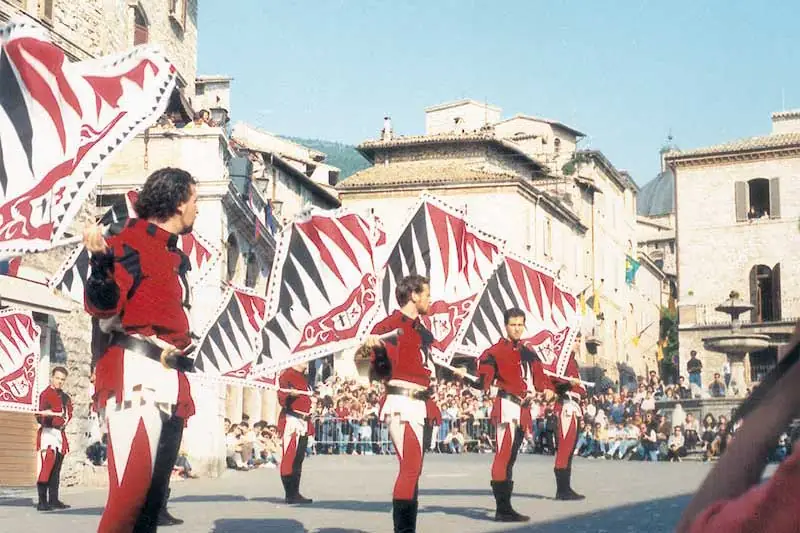
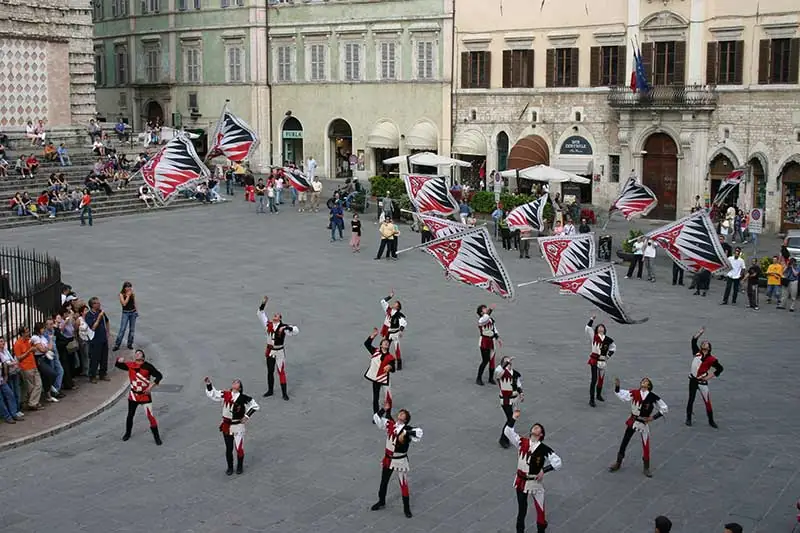
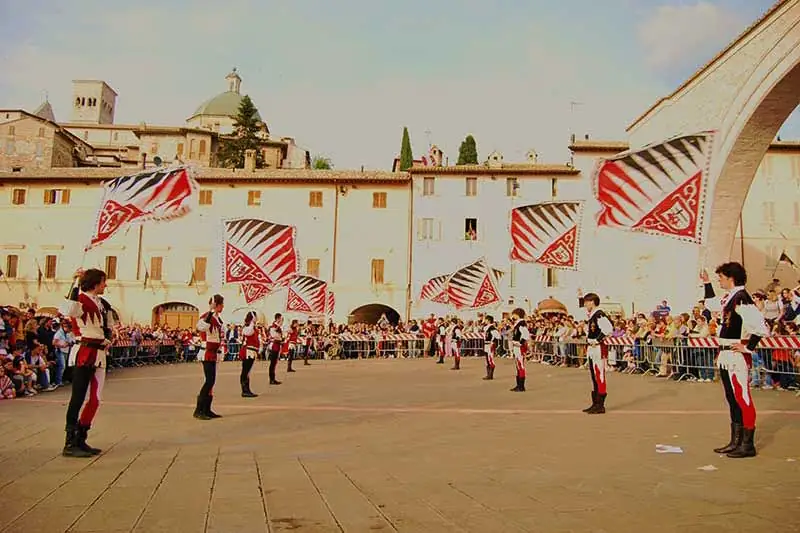
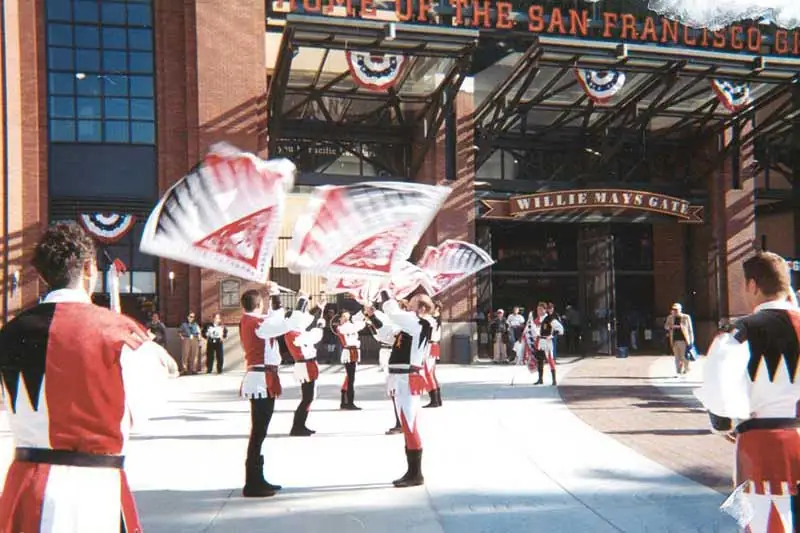
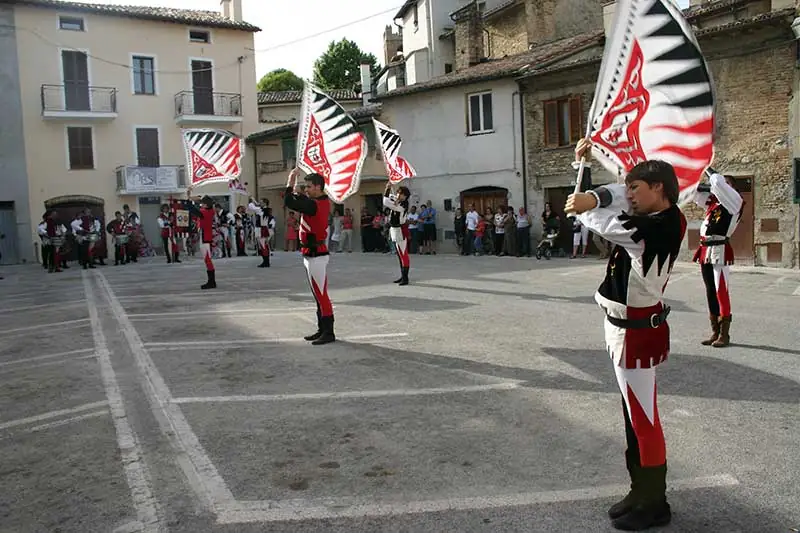
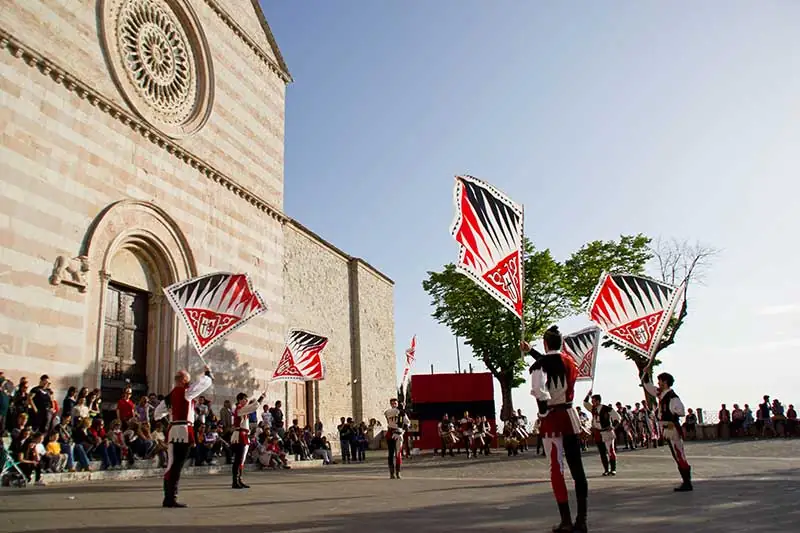
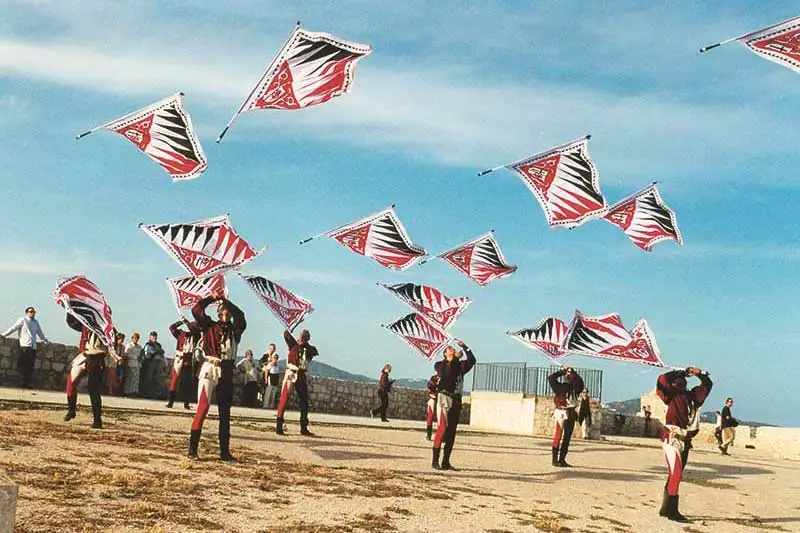
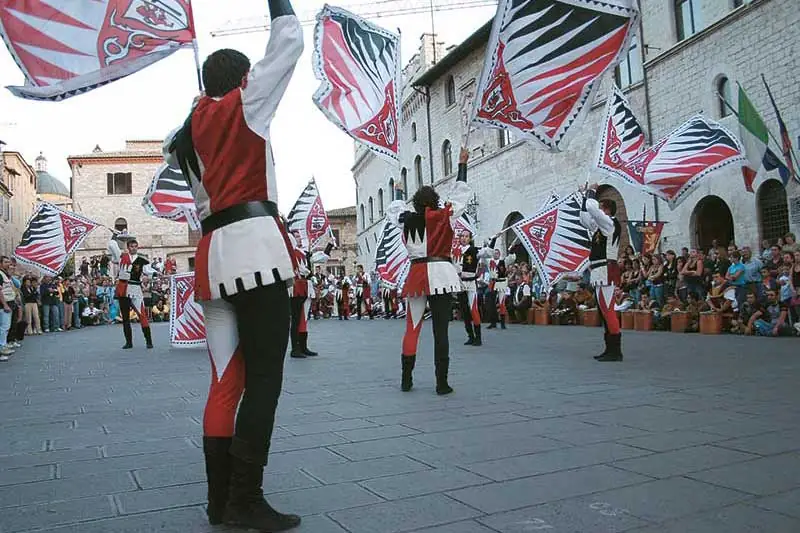
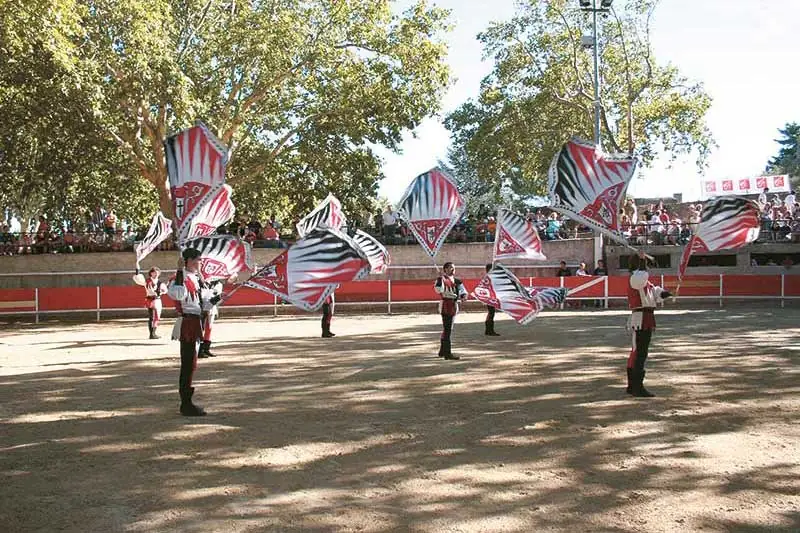
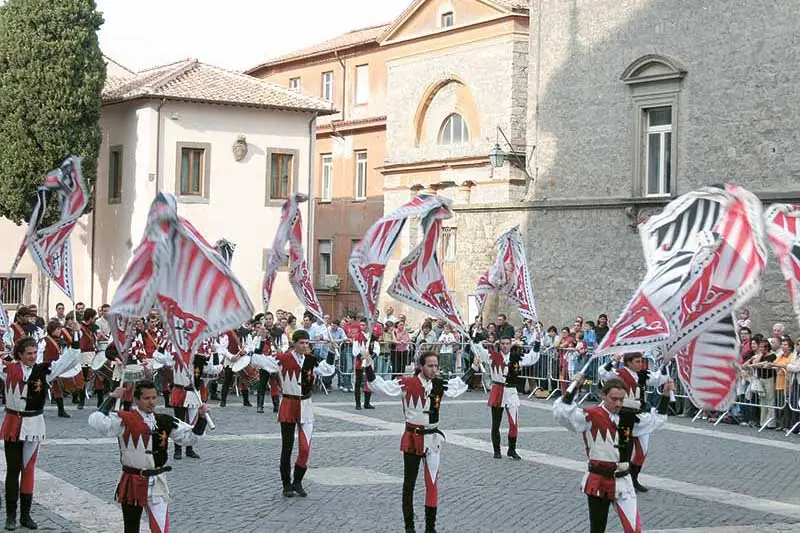
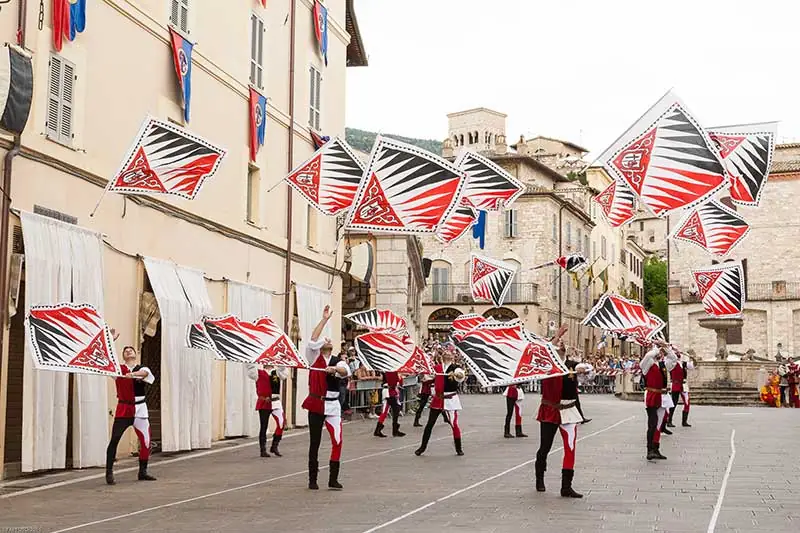
The performance has always shown the fundamental exercises and passes of the Assisi School and the basic technical elements that make someone a flag-waver. The great squad, known as the “Ghironda”, is made up of eight to sixteen members.
 Sbandieratori
The art of the flag
Exercises and passes of the Assisi School, from the Great Squad to the Fiocco: eight numbers accompanied by the sound of the drums.
Through the art of the flag, the Group sets out to re-evoke moments from the history of its city and to express the noble spirit of freedom. The Sbandieratori di Assisi are Messengers who, from their districts, go to meet the Peoples in every corner of the world, bringing the Franciscan greeting of Pace e Bene (Peace and Good).
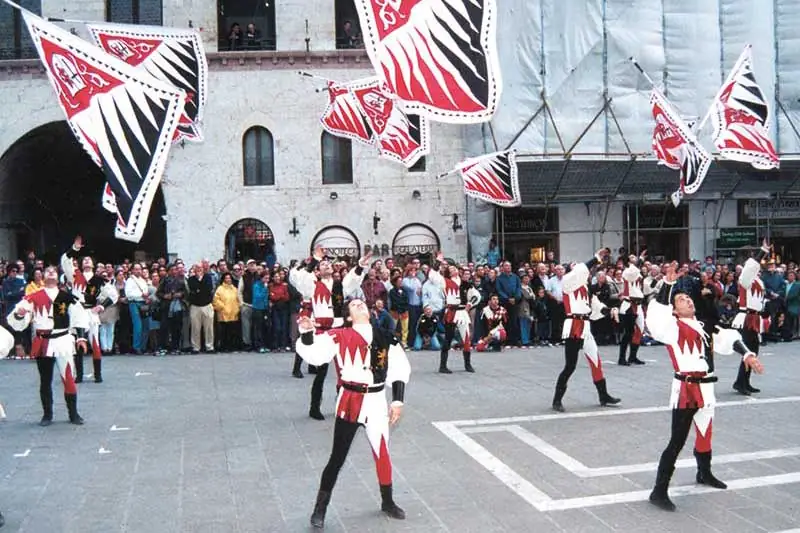
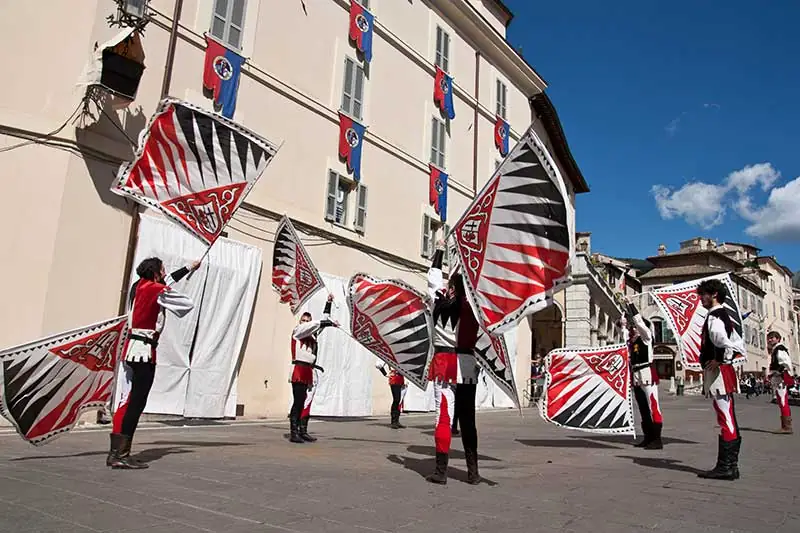
Determination, precision, skill in handling the cloth, dexterity, a sharp eye and careful athletic preparation are the elements that make up a show that has always been a success. The performances are made of numbers performed by one or more members with one or more flags, so that every flag-waver contributes to the success of the show.
The running order
The rhythm
The movement of the cloths is always accompanied by the rhythmic, unmistakable sound of the musicians. After the first five years the Group already had a rhythm section of its own and a “new sound” made of precision, composure and measured gesture, in tune with the elegance of the flag-wavers.
In some numbers, such as the Delfino (Dolphin), the audience hears only the sound made by the movement of the flag.
“Their only enemy is the wind.”
The performance has always shown the fundamental exercises and passes of the Assisi School and the basic technical elements that make someone a flag-waver. The great squad, known as the “Ghironda”, is made up of eight to sixteen members.
Precision and synchrony characterise this number, enhanced by difficult close throws, passes around the body and crossed exchanges. The number called “the Unicorn” once again shows the technical and artistic skill of the Sbandieratori di Assisi.
It is made of a succession of rhythmic movements by 4 flag-wavers who, with refined technique, handle first one flag, then two.
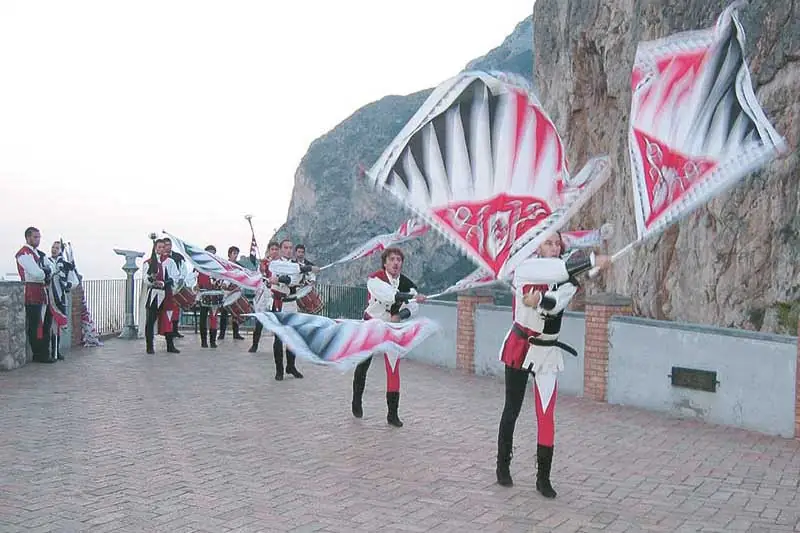
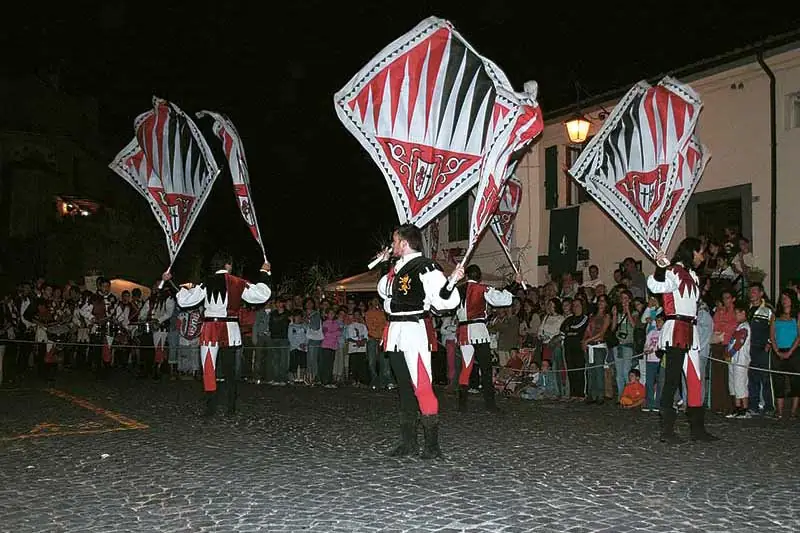
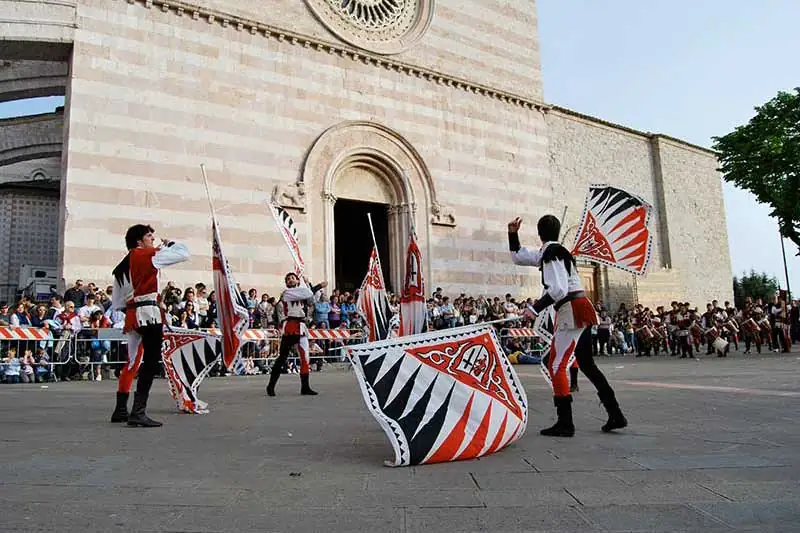
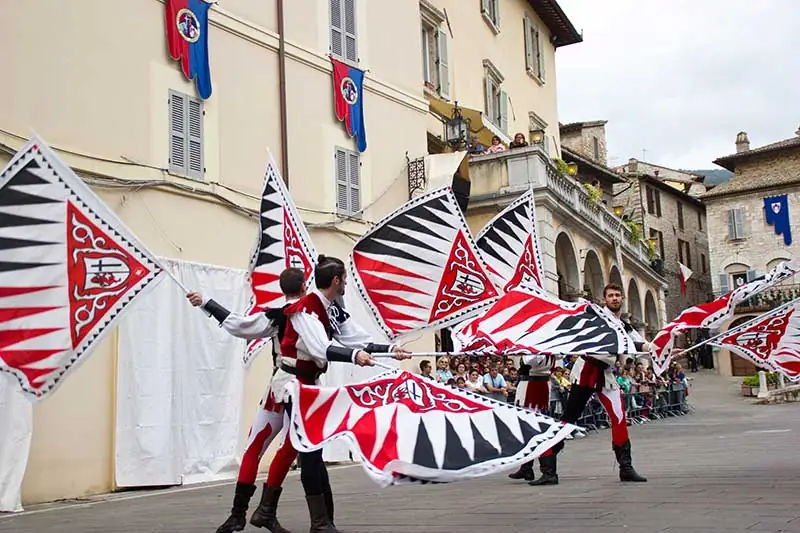
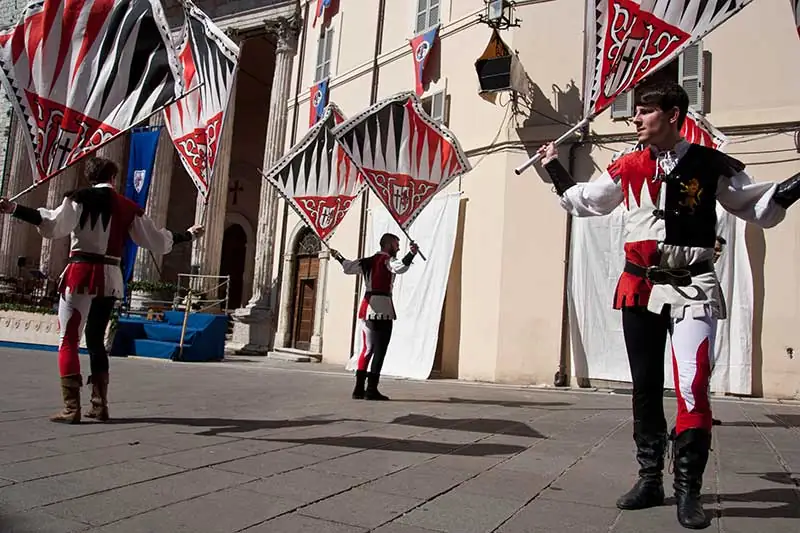
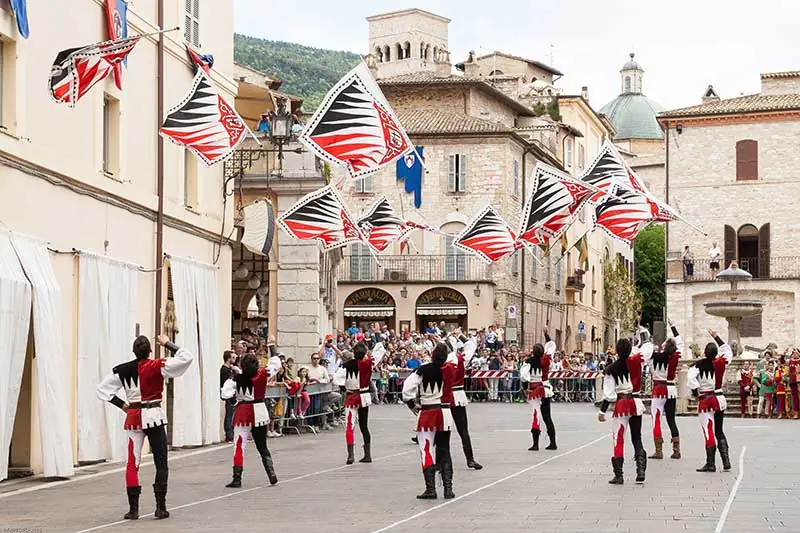
Performed by eight members with two flags each, it is a succession of rhythmic, synchronised movements in geometric figures that recall the medieval castles overlooking Assisi. The movement of the cloths is always accompanied by the rhythmic, unmistakable sound of the musicians.
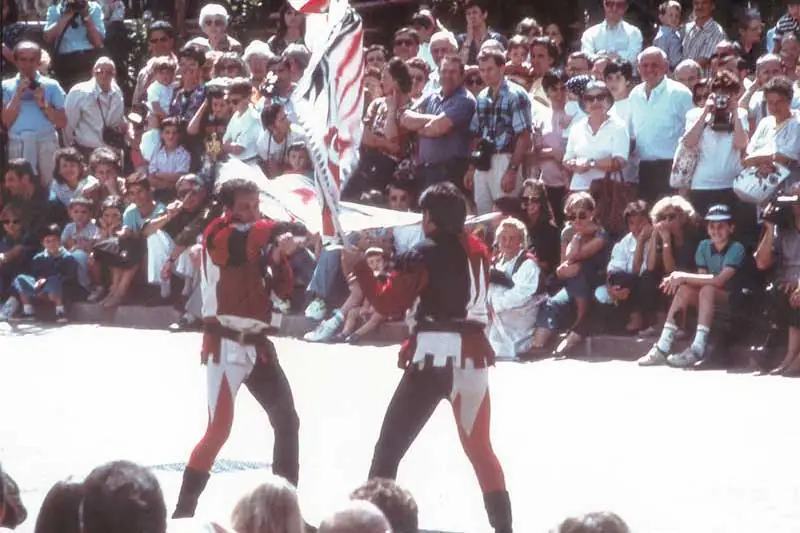
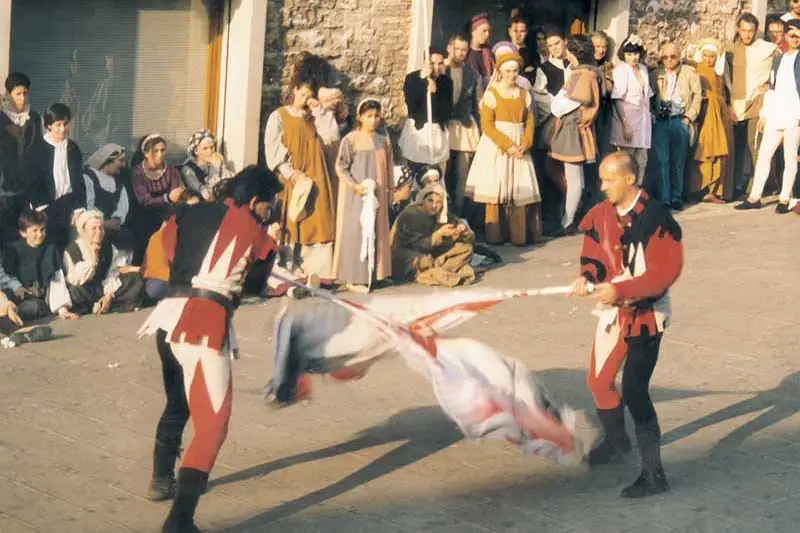
The duellists face each other using the flags as real weapons. The number is characterised by the skill, dexterity and sharp eye of the two contenders.
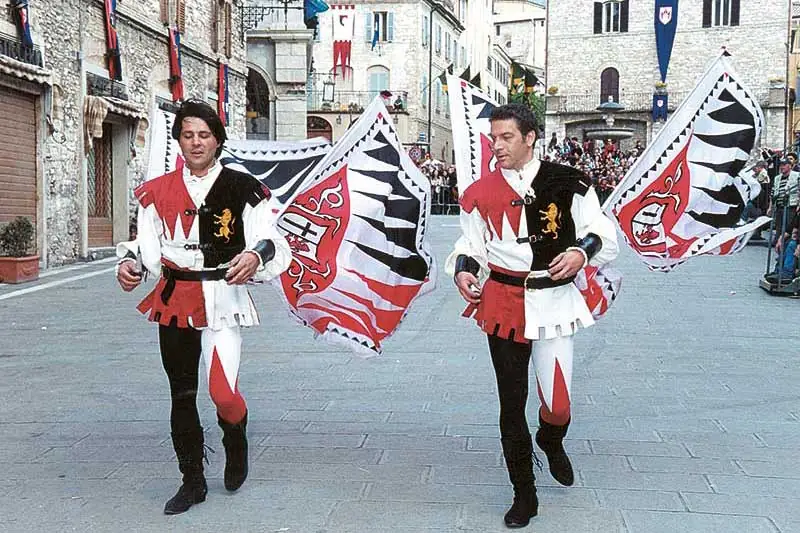
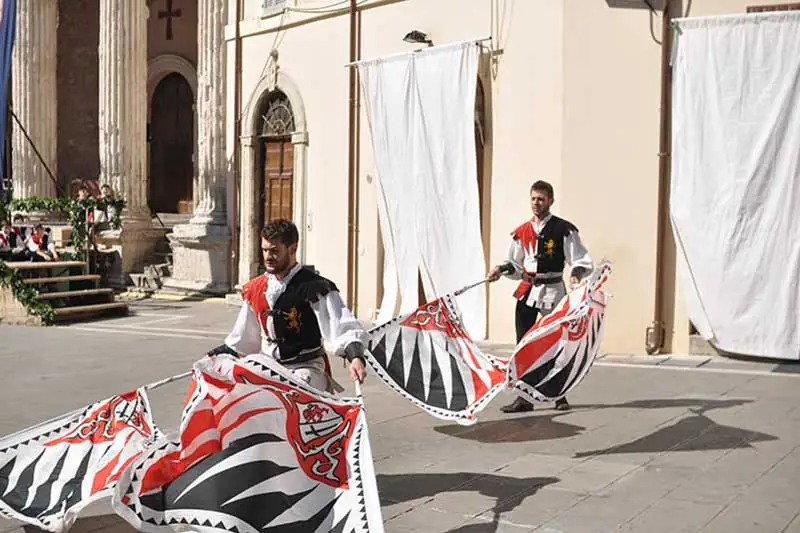
Now it is the turn of the Group’s soloist who, spinning first one, then two flags, with quick passes around the body, recalls the skill and mastery of the jugglers who, wandering, entertained the medieval courts.
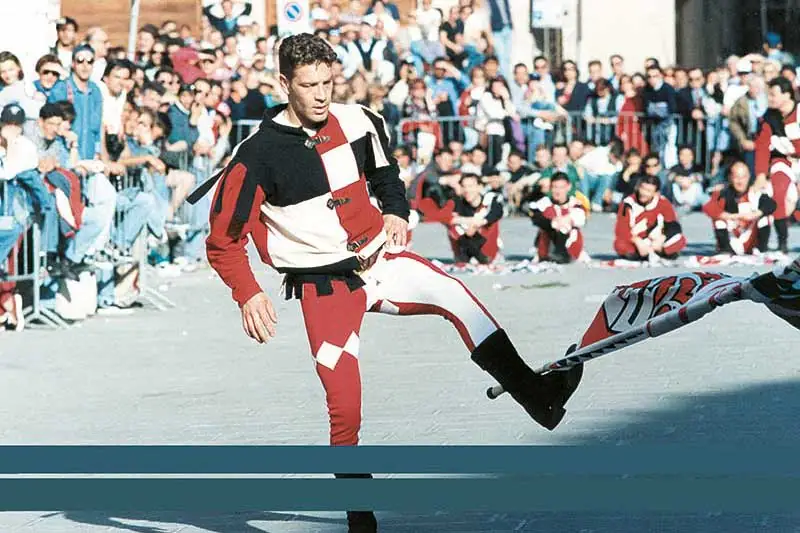
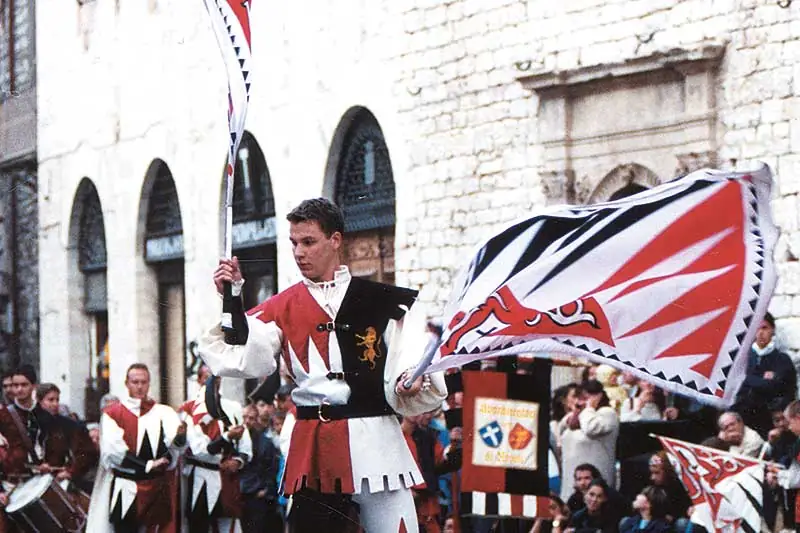
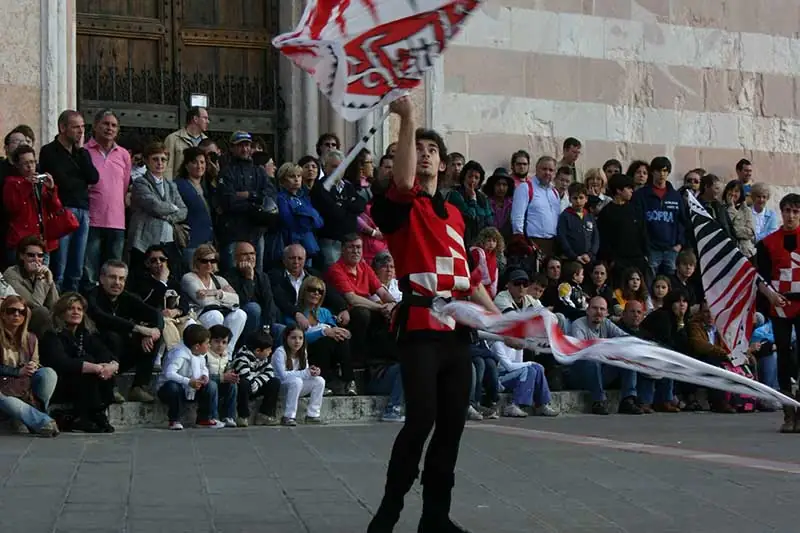
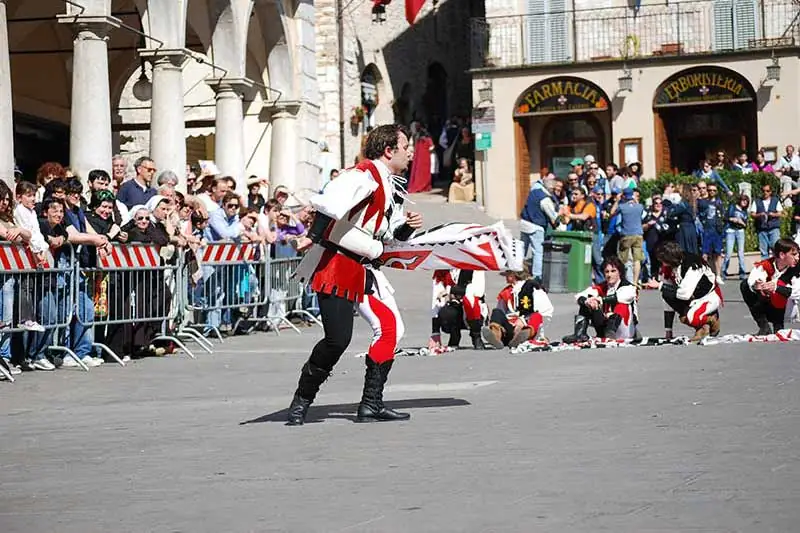
The Tournament, known as the “Gabicce”, is an exercise of great effect and difficulty: eight members take on the compulsory passes to earn the title of flag-waver. The finale has an almost pyrotechnic rhythm: with the drums building in a crescendo, the flags interweave more and more in an exceptional series of difficult and dangerous throws.
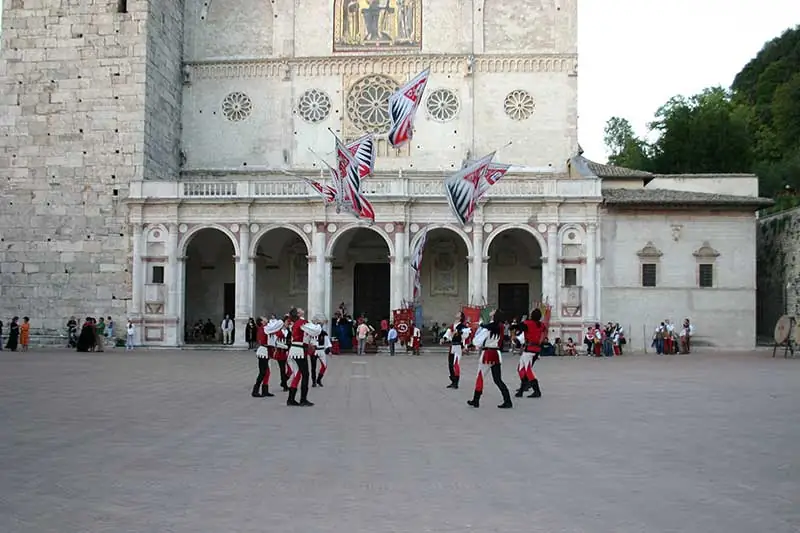
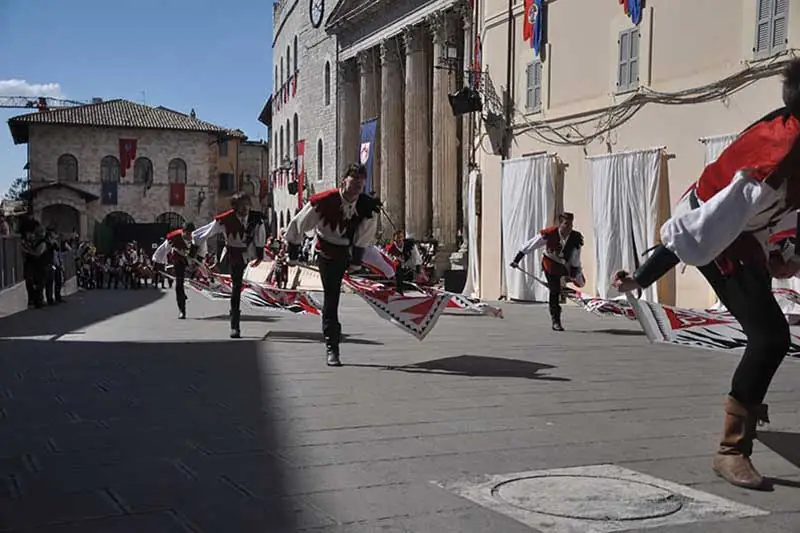
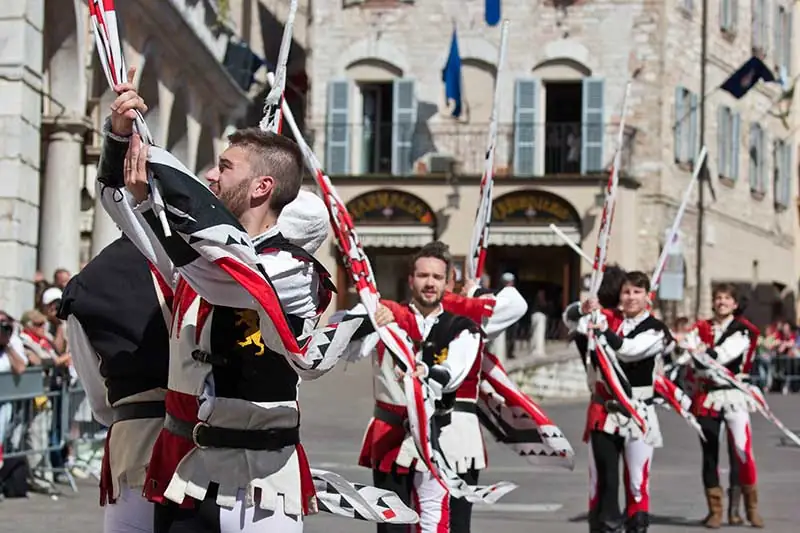
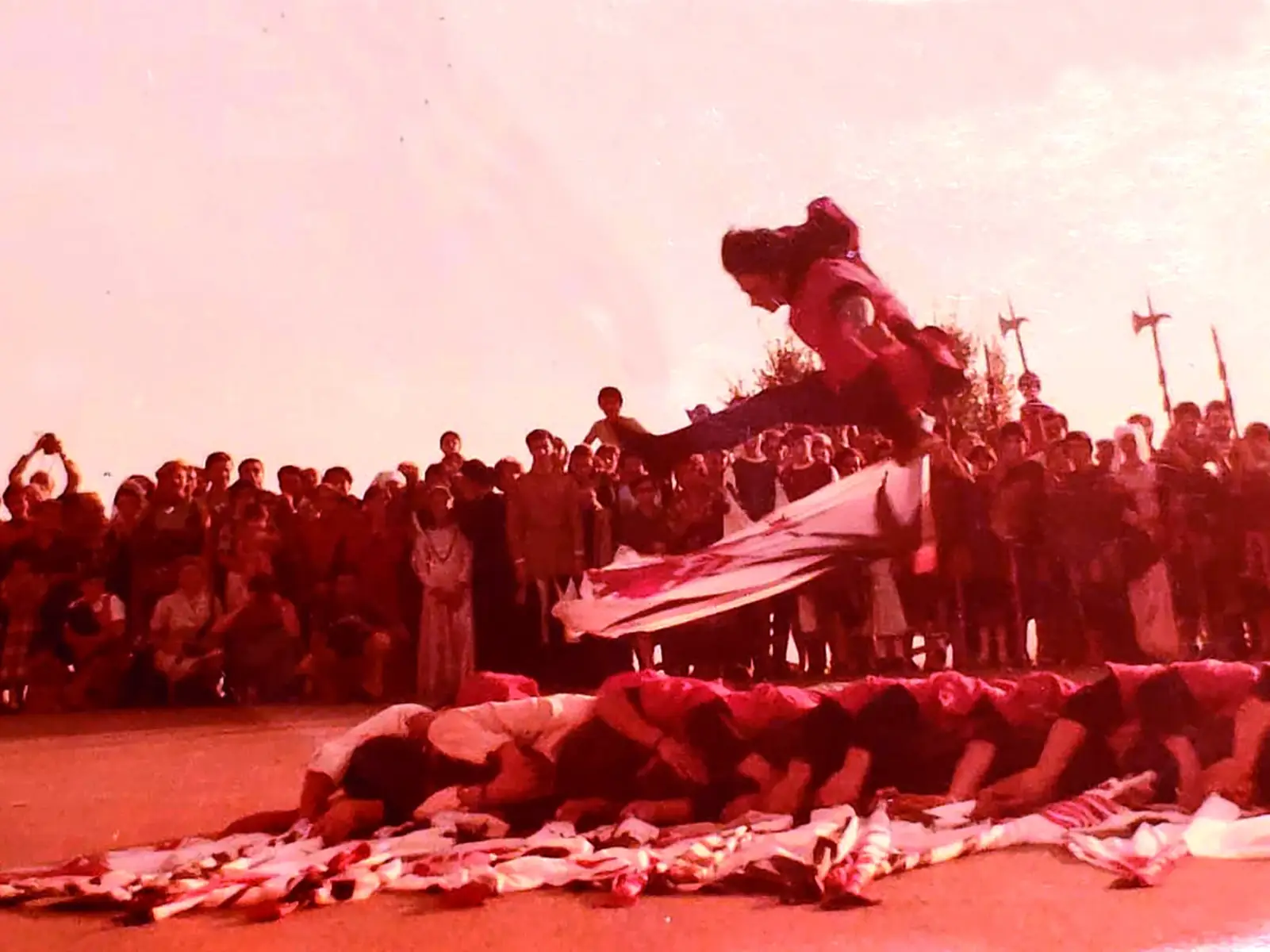
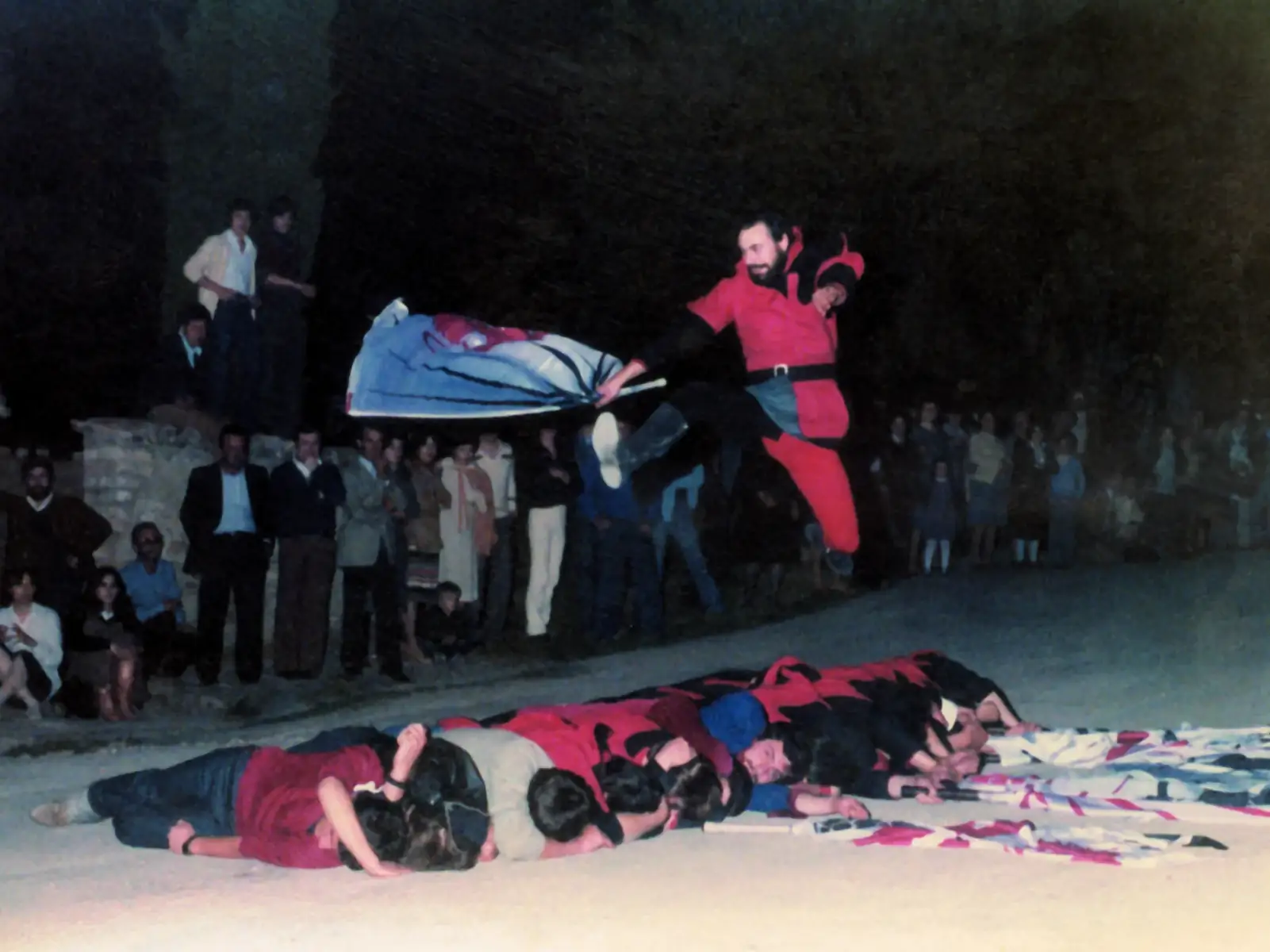
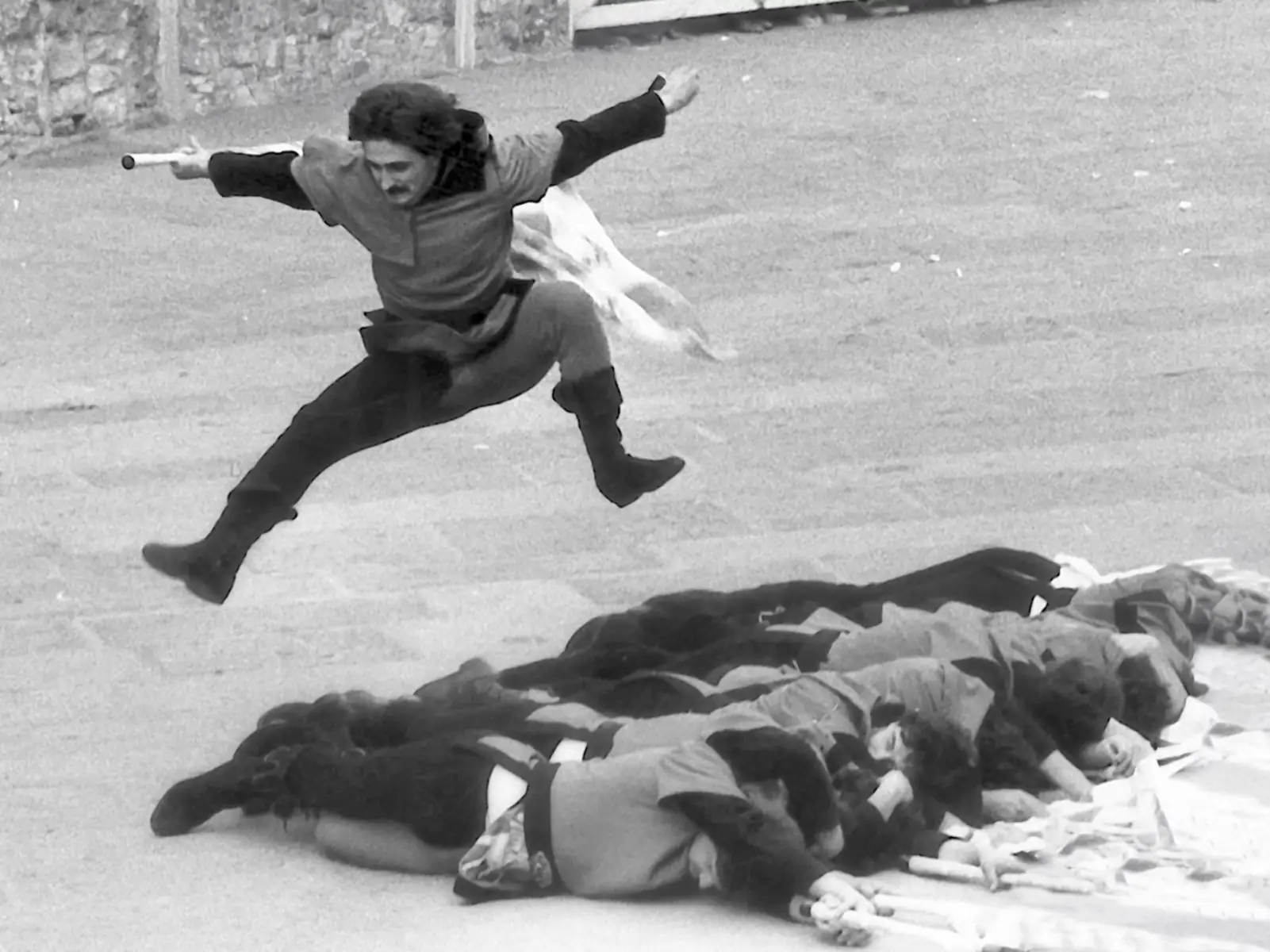
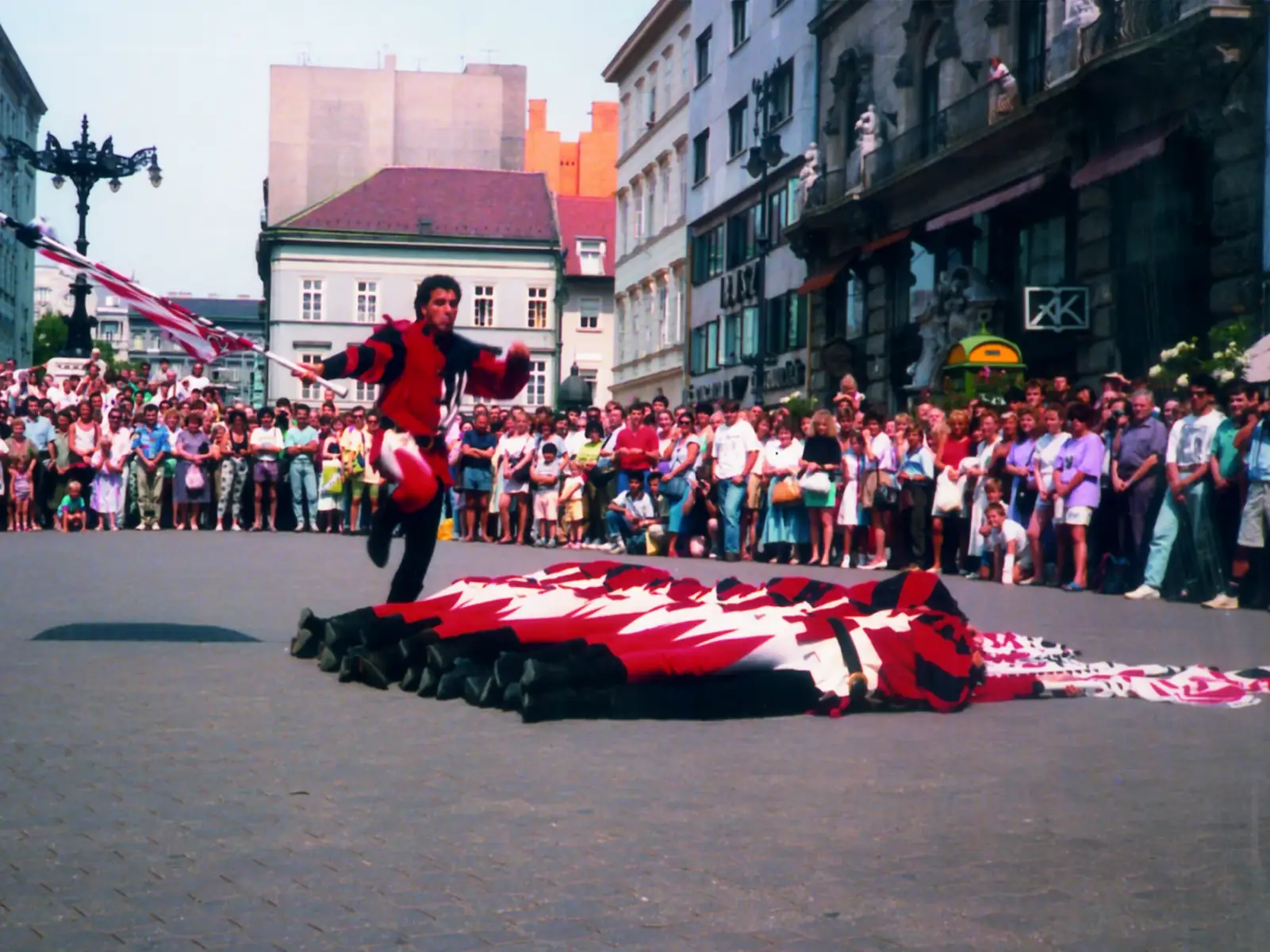
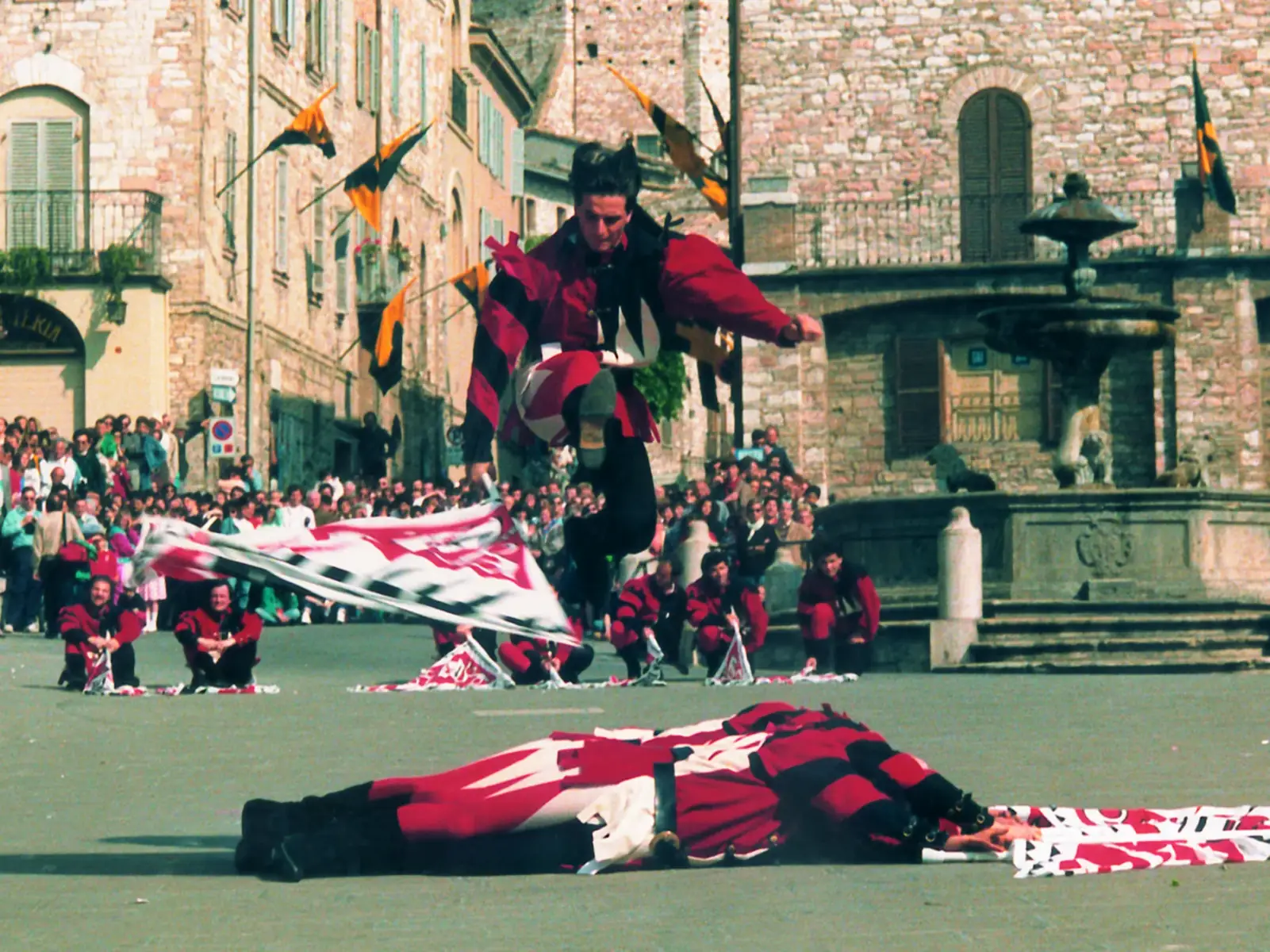
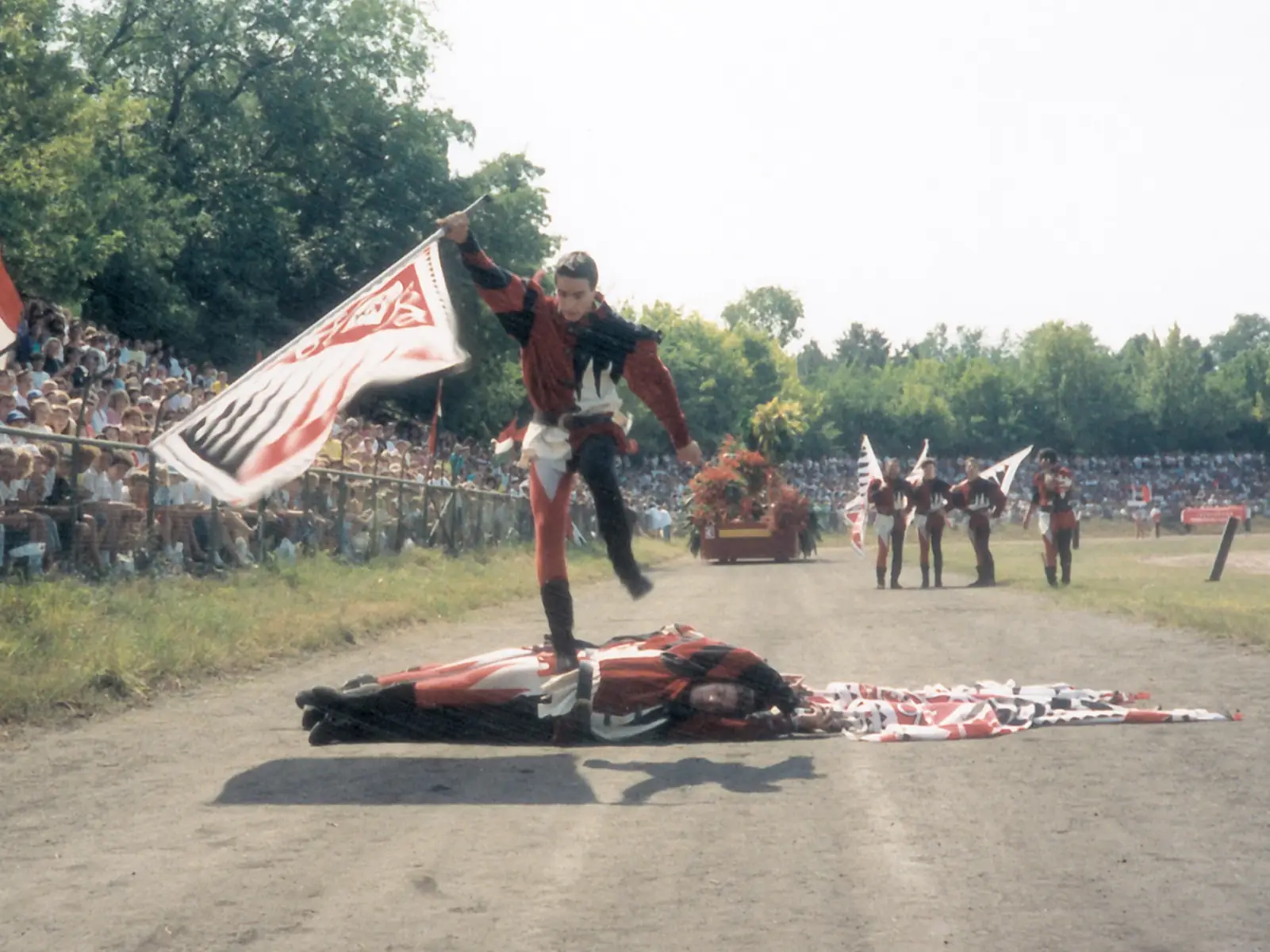
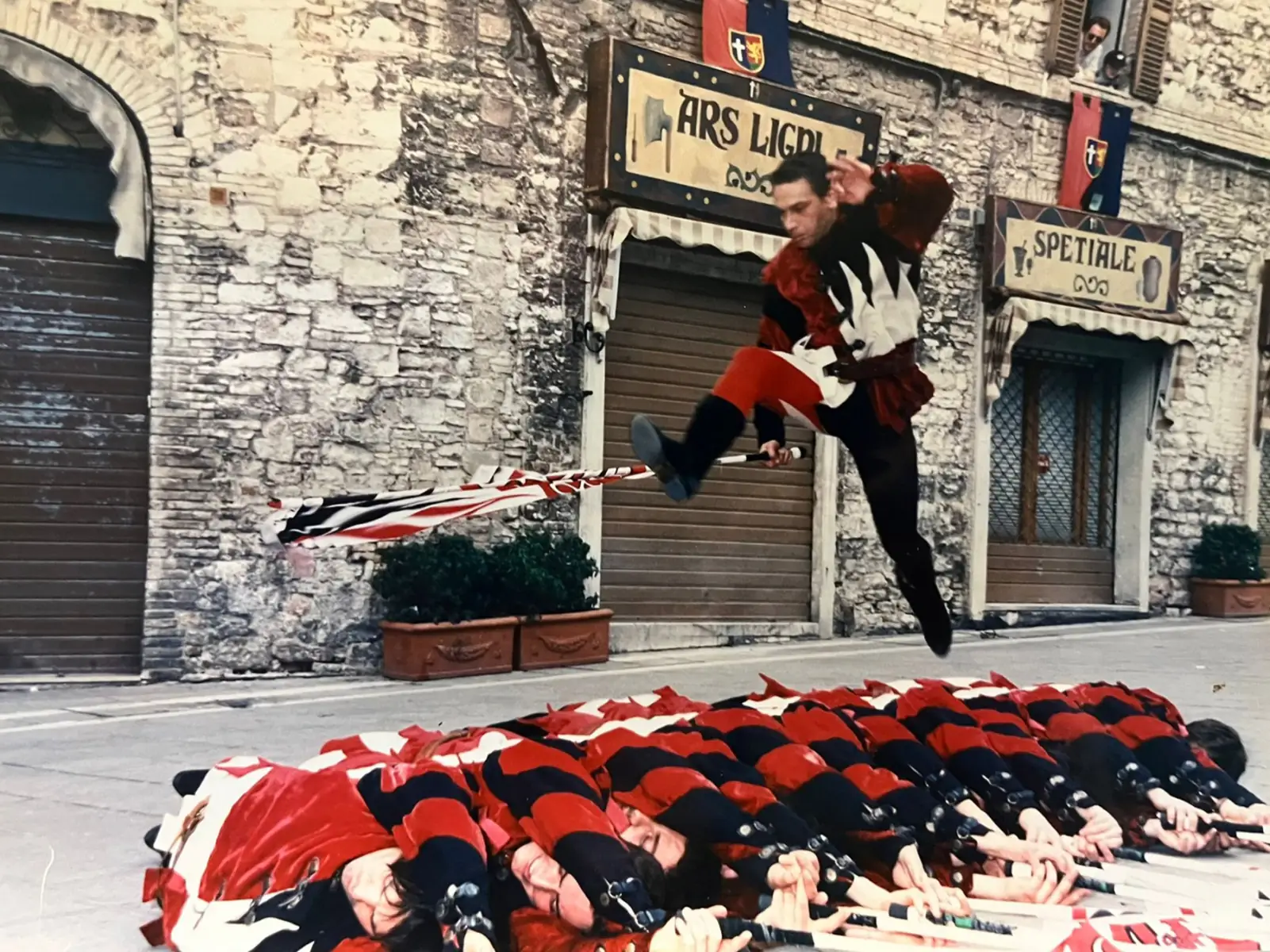
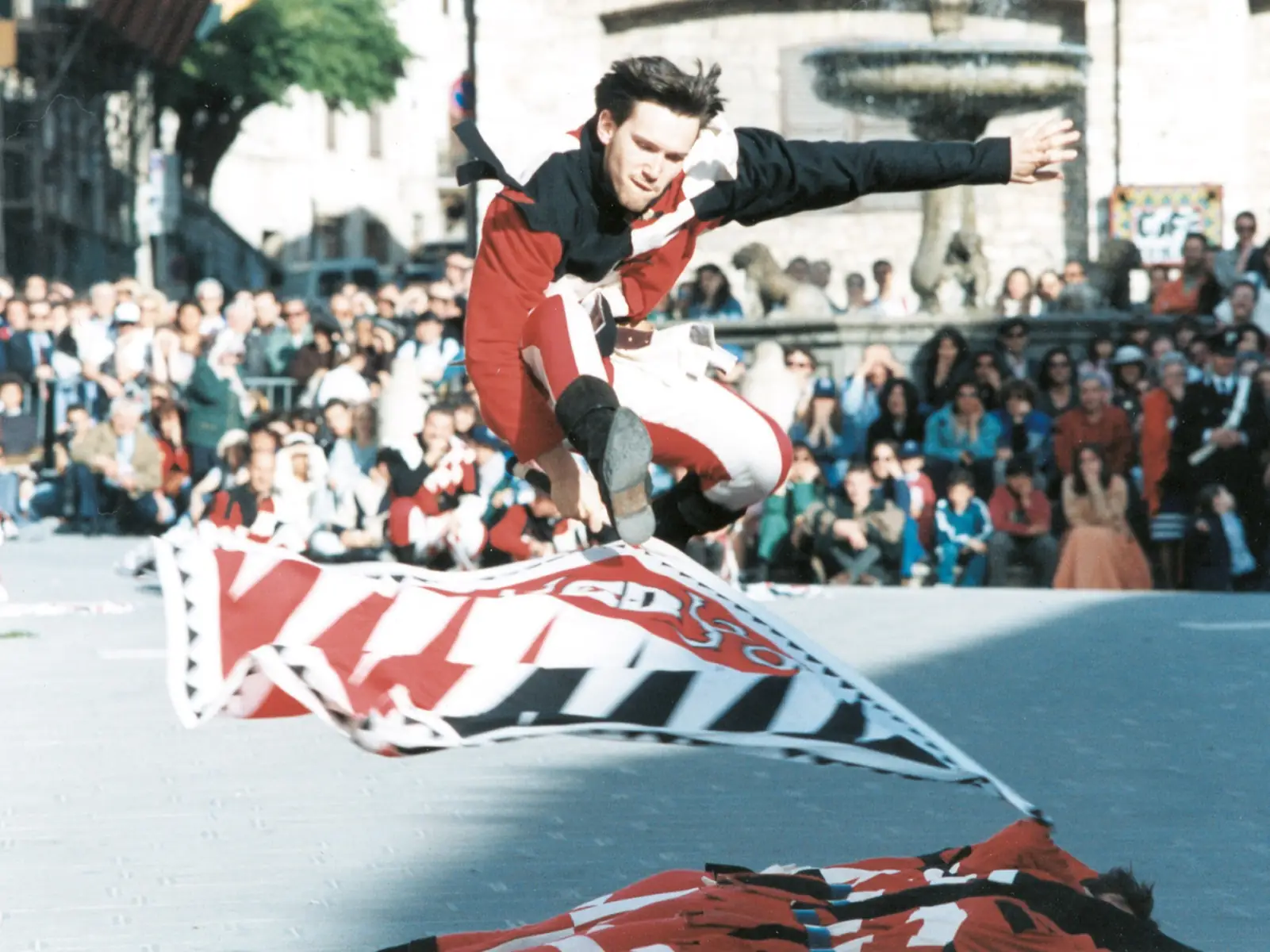
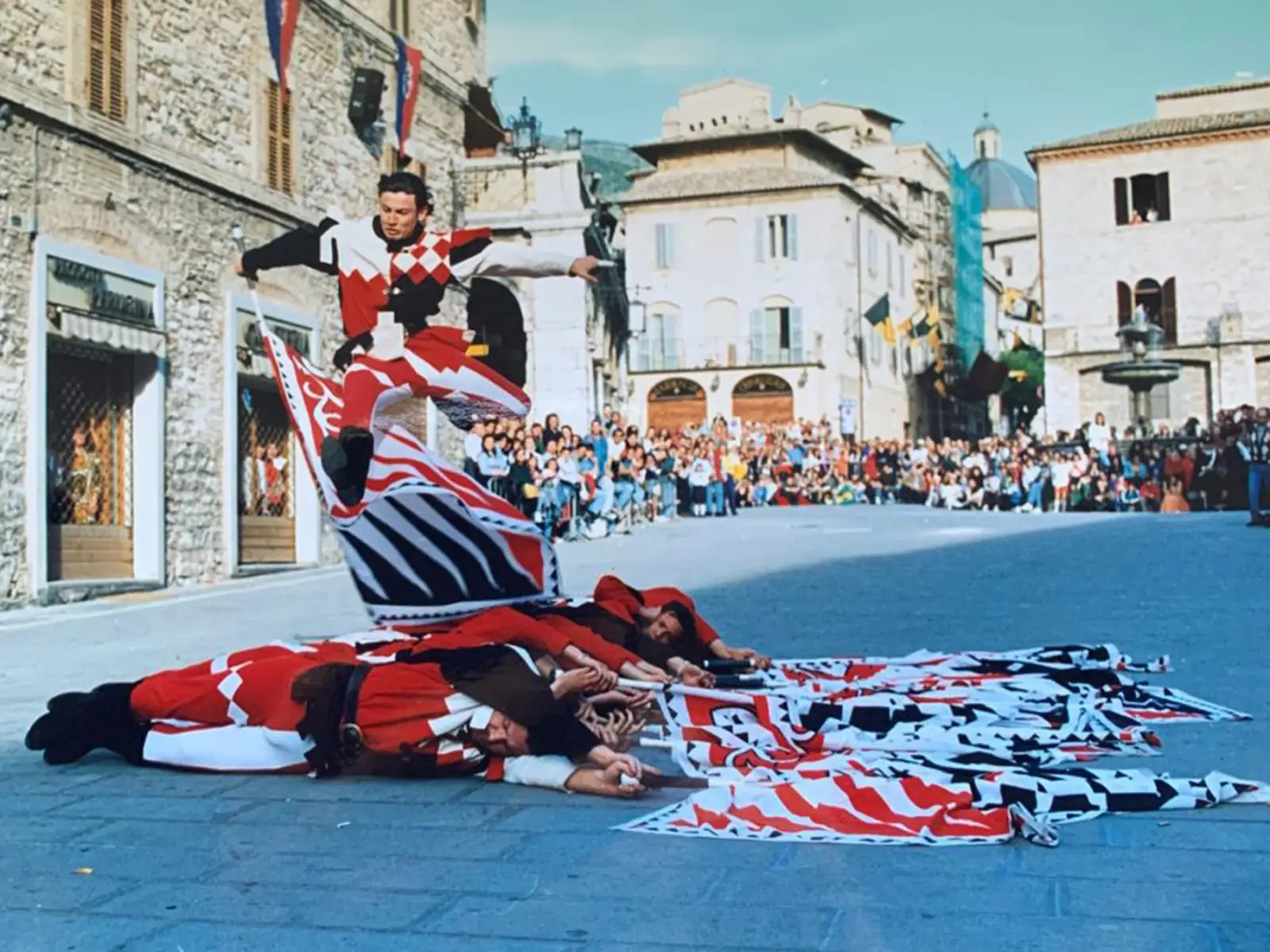
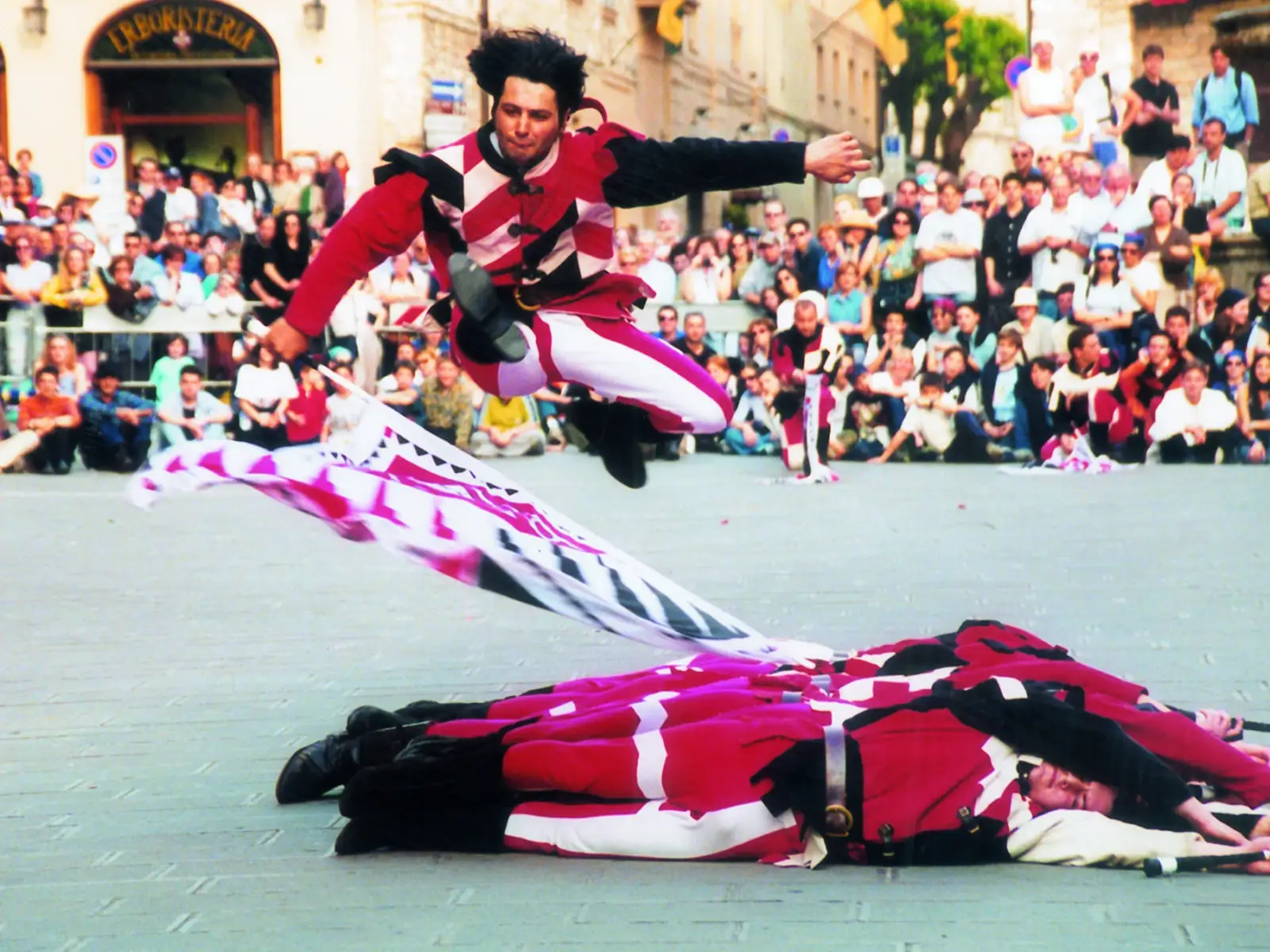
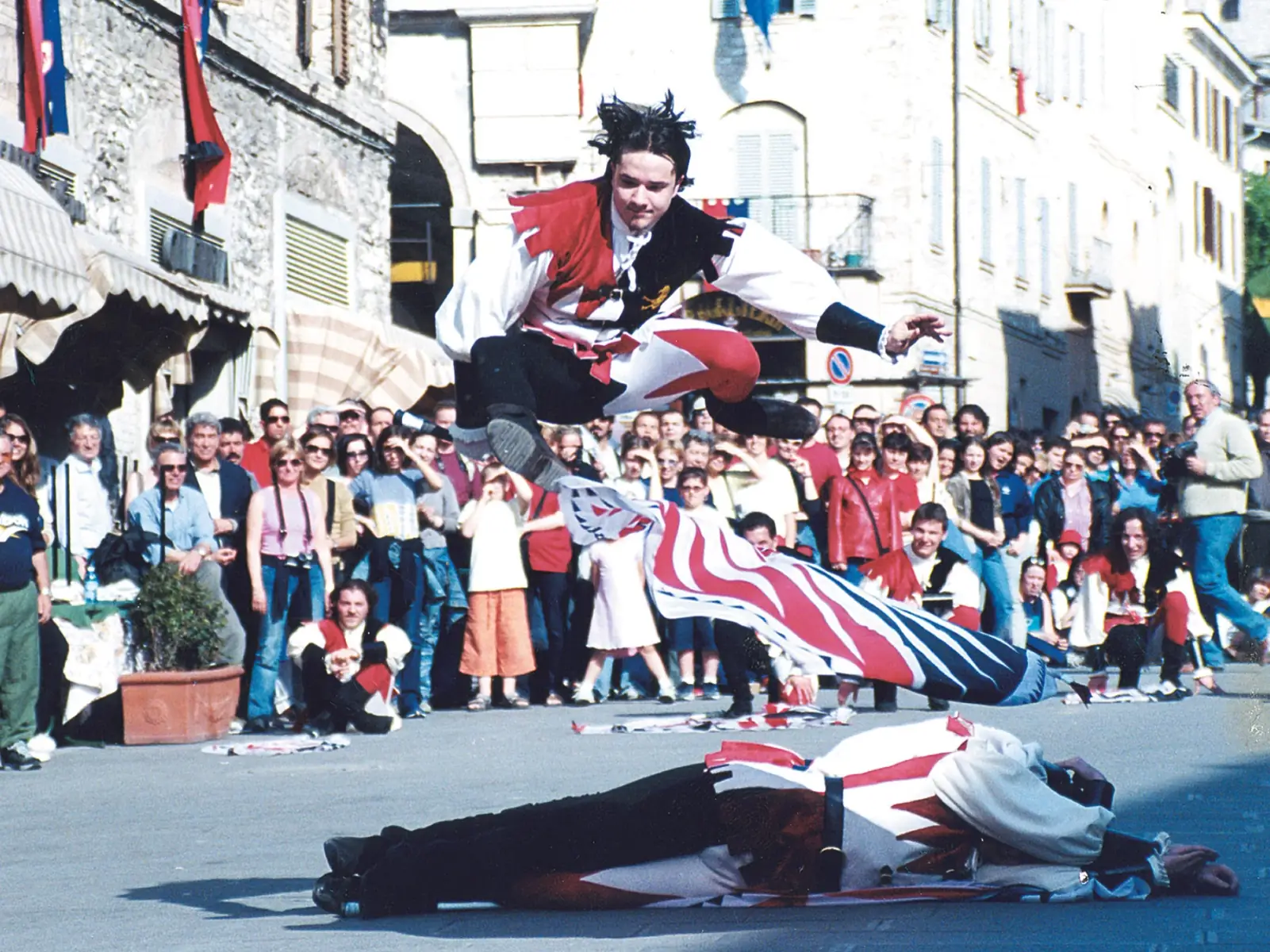
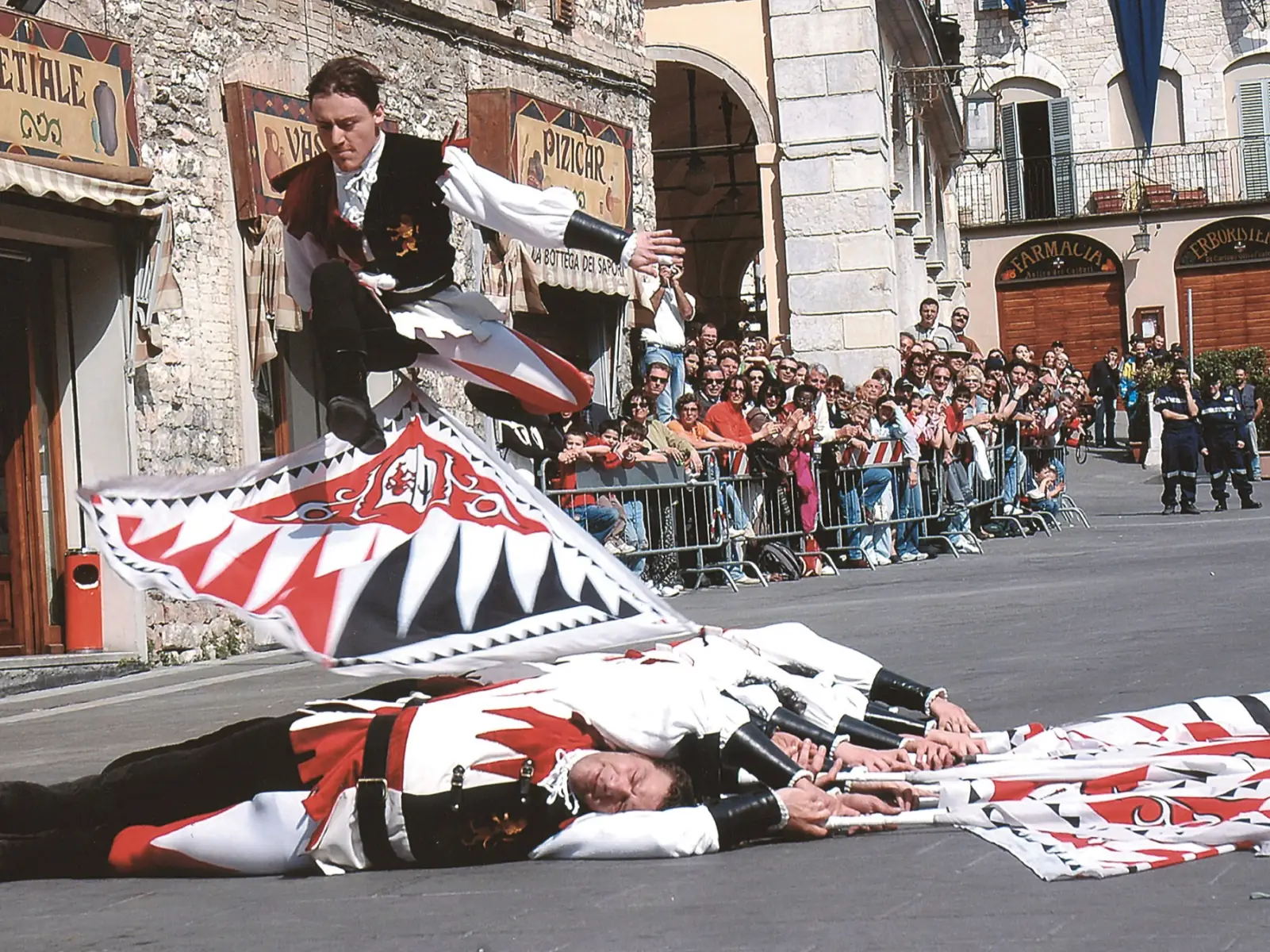
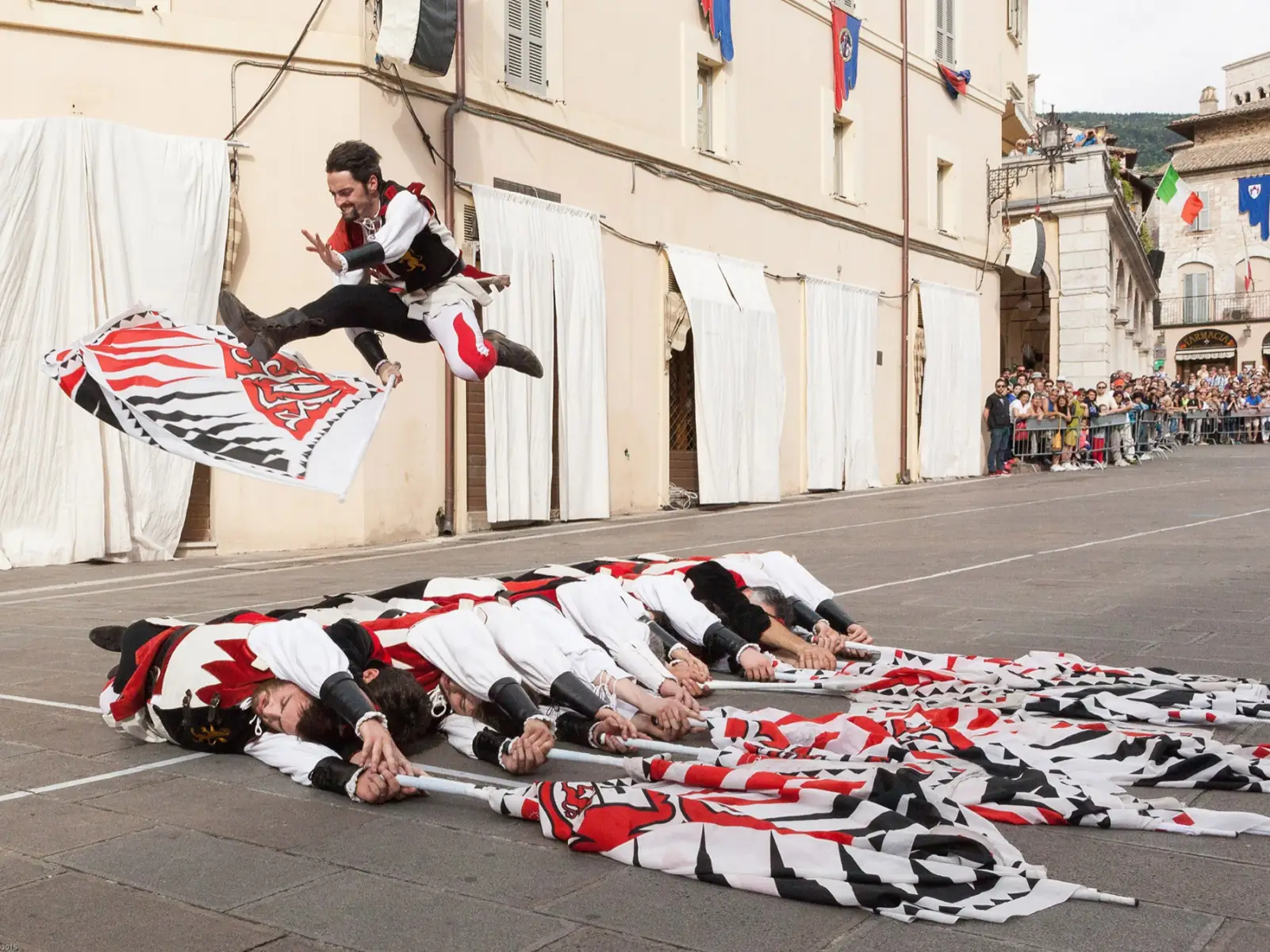
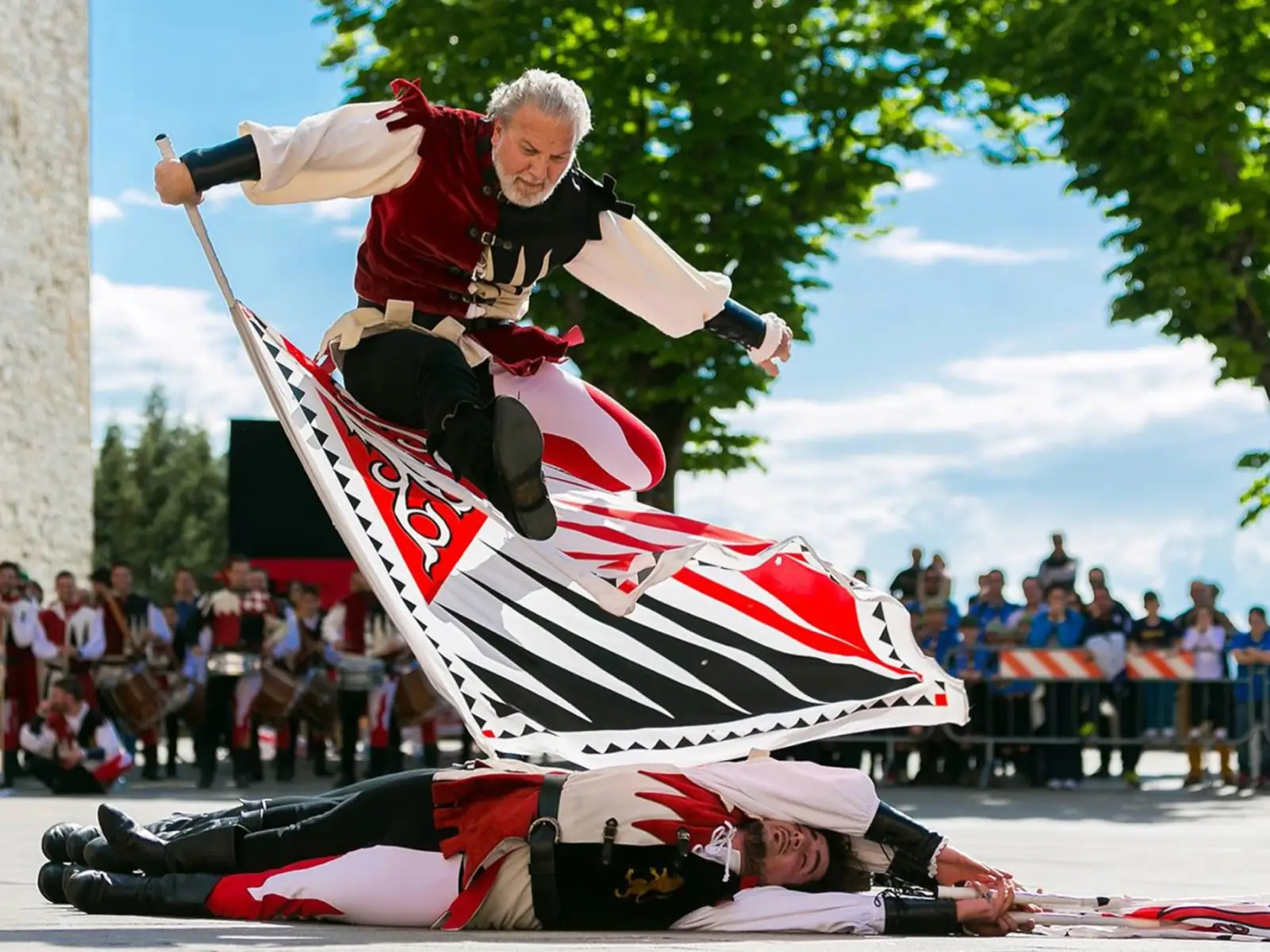
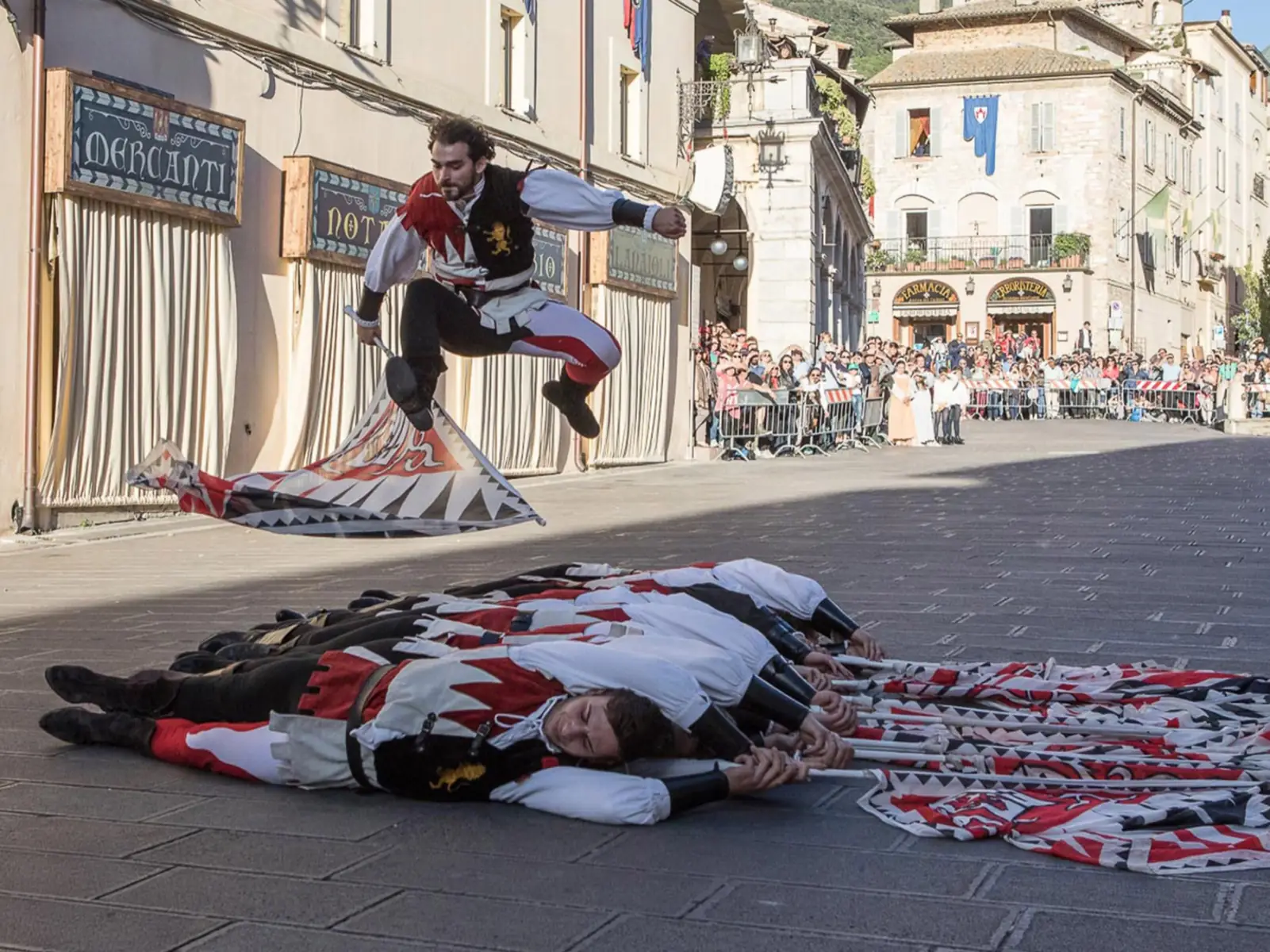
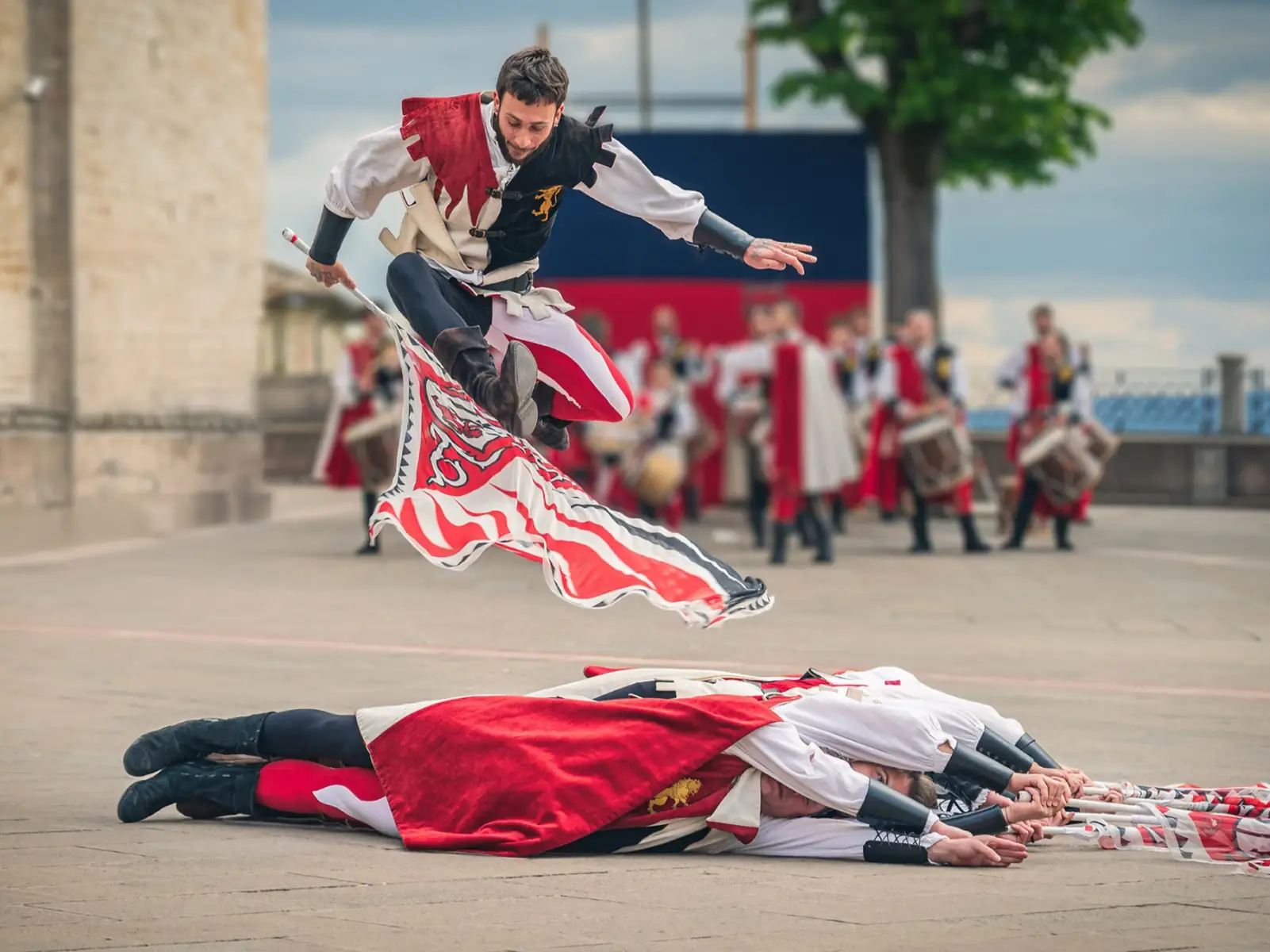
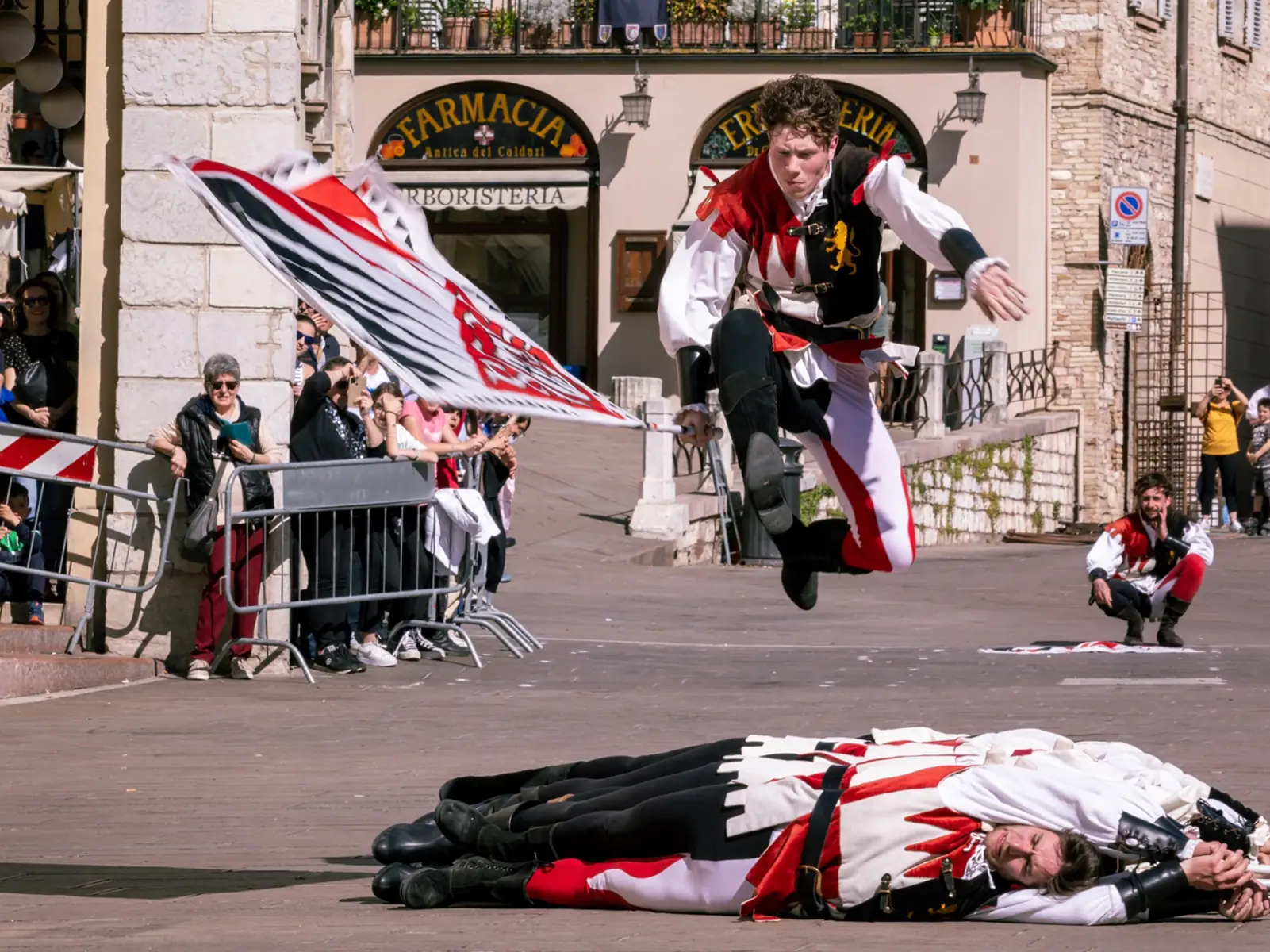
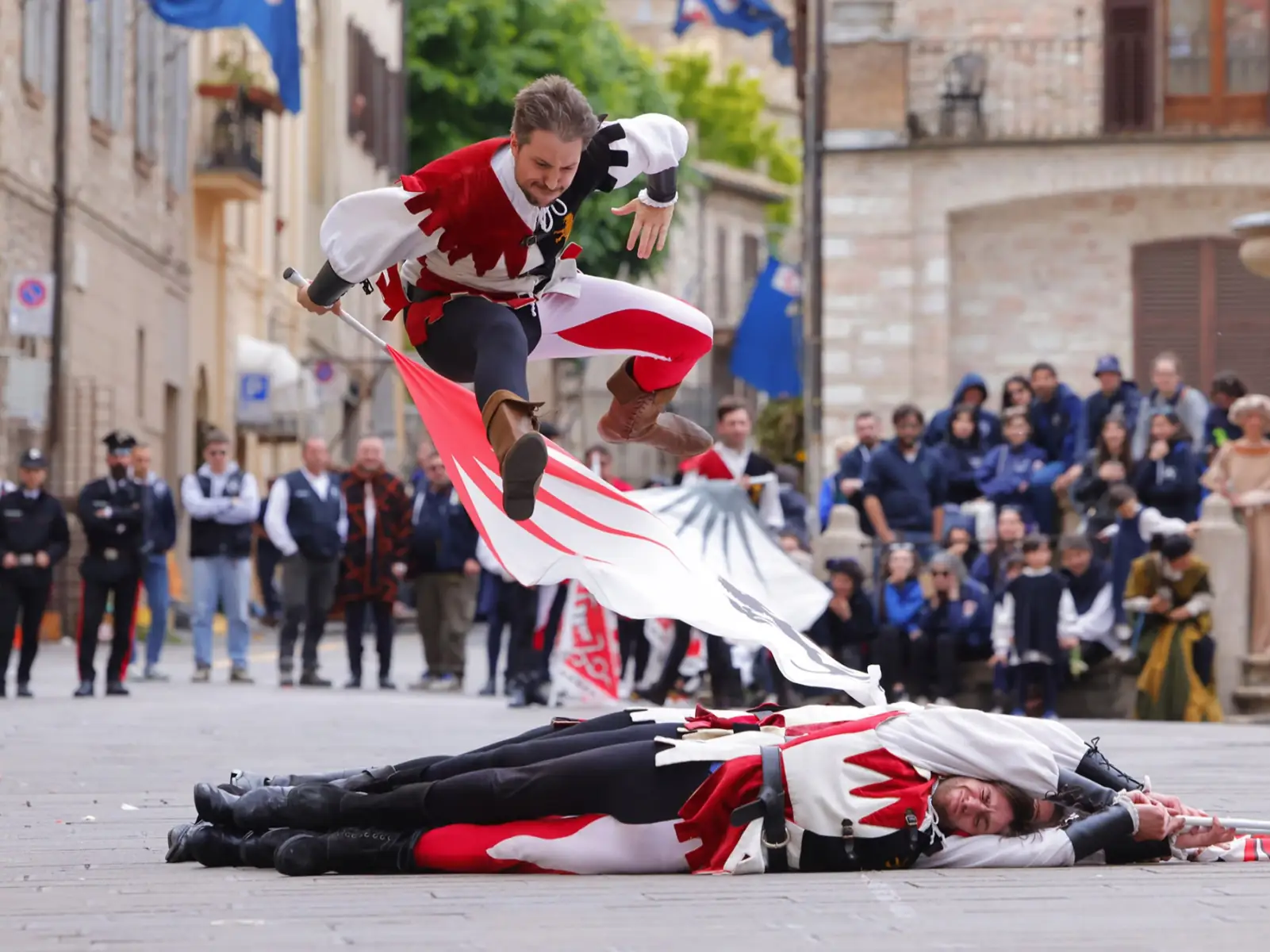
This number brings the performance to a close. It is the most dangerous and gripping number: each flag-waver must jump over his companions while passing the flag under his legs at the same time. The difficulty increases as the number of flag-wavers lying down grows. The first flag-waver on the ground marks the distance needed to start the jump.
The growing rhythm of the drums, the run-up… The take-off. A breathless flight that seems endless as you watch your companions lying on the ground slide beneath you. The silence is broken by applause and a smile lights up your face. Only those who have done it, above all in Piazza del Comune in Assisi during Calendimaggio, know what it feels like.
Luca Campodifiori, Il Fiocco
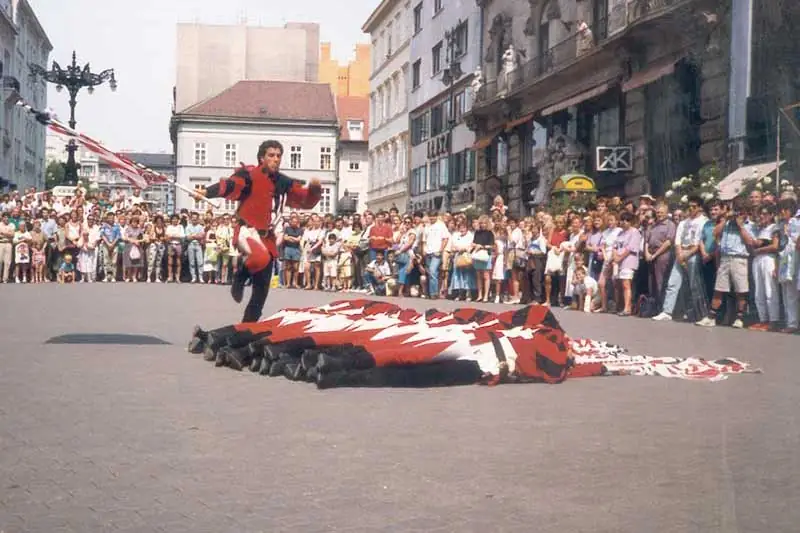
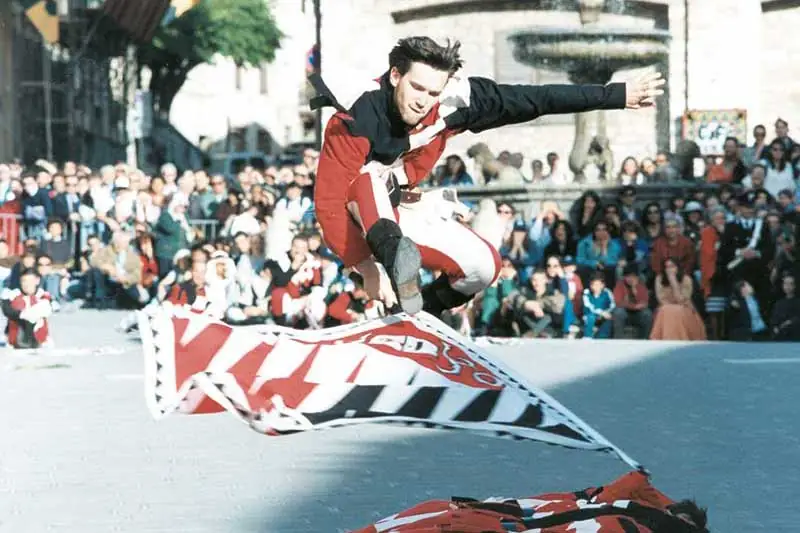
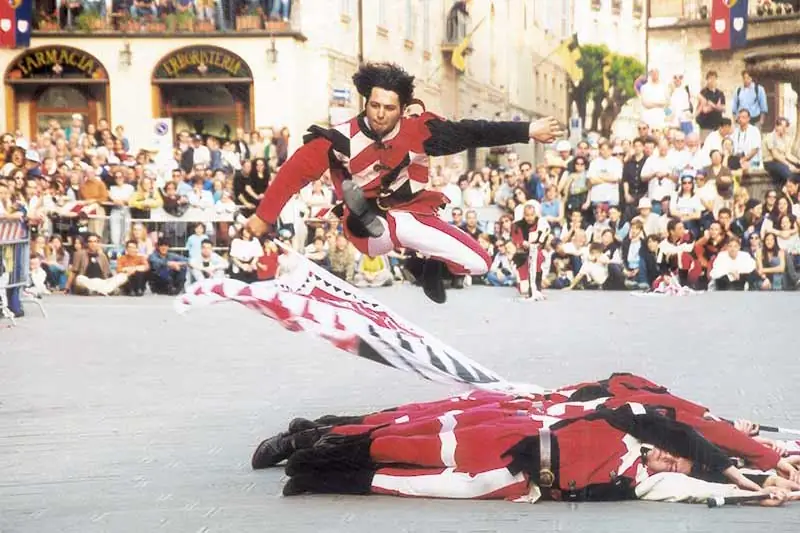
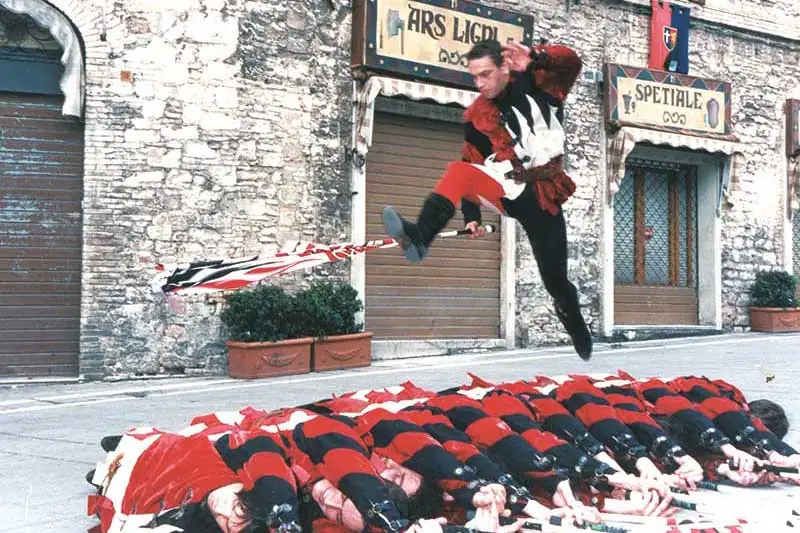
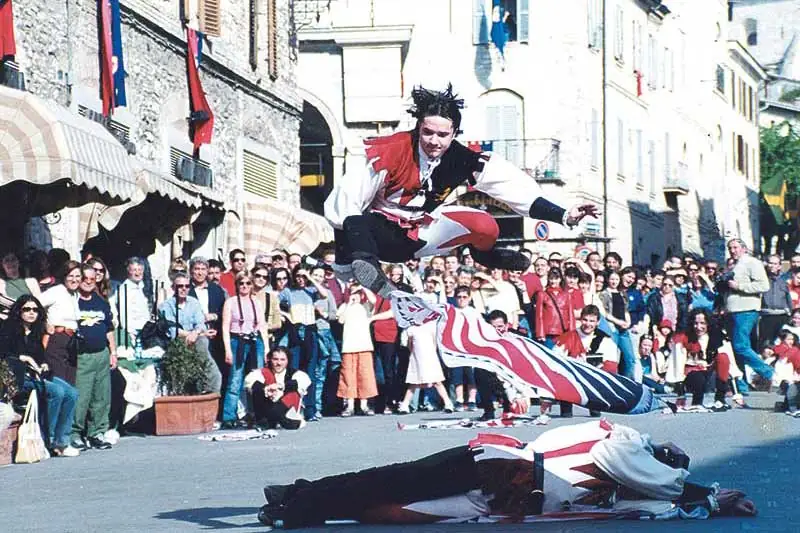
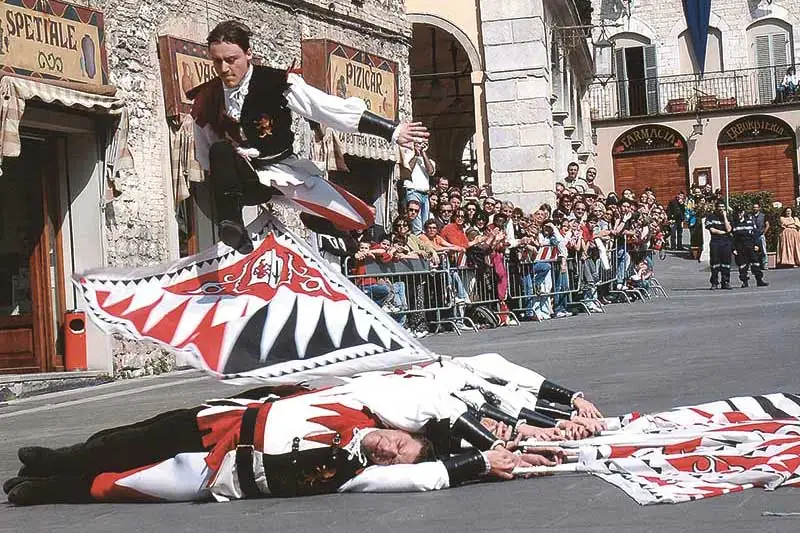
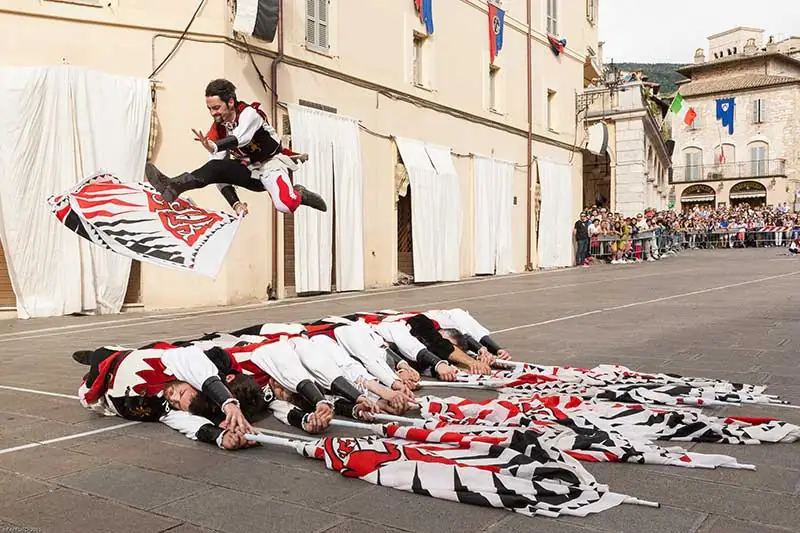
From 1977 to today: the last jumper of every era.
Hire the group
Festivals, historical re-enactments, official events, weddings and shows in Italy and abroad.
Book the show